Residency Interviews Blog
SAMPLE RESIDENCY INTERVIEW
QUESTIONS AND ANSWERS

I hope you enjoy reading this blog post.
If you want my team to help you with your Interview Preparation, click here.
Updated Nov 2025
SAMPLE RESIDENCY INTERVIEW QUESTIONS AND ANSWERS
Embarking on your residency interviews can feel like stepping into uncharted territory. To help you prepare for your residency interview and navigate this crucial phase with confidence, we’ve crafted a comprehensive guide filled with sample answers to the most frequently asked residency interview questions.
Tailored with insights from our experienced professionals, this guide aims to provide you with the foundation to present your best self and leave a lasting impression. A few questions in this guide are accompanied by a variety of response scenarios, tailored to cater to the diverse backgrounds and experiences of applicants.
Before we start, if you need help preparing for residency interviews, check out our residency interview preparation services HERE. Our Residency Interview Preparation Service is 100% satisfaction guaranteed.
Table of Contents:
- Tell me about yourself
- Why this specialty?
- What are your strengths?
- Weaknesses
- Tell me about a failure
- Can you describe a situation where you faced a conflict and explain how you handled it
- What are your plans after residency?
- Tell me about a stressful situation you went through and how you overcame it
- Tell me about a time that you had to deal with a challenging patient
- Do you have any questions for me?
- Tell me about something interesting about you that wasn’t included in your CV
- If you had to change one thing about the specialty you are applying to, IM, what would that be?
- If you had to describe the specialty IM (you are applying to) to a friend in three words, how would you describe it?
- Tell me about your volunteer activities
- Tell me about your research
- Tell me about your medical school experience
- What skills would you be bringing to our program?
- Why should we choose you instead of other applicants?
- If I asked a friend who knows you very well about your best characteristics, how would they describe you?
- Why did you have a failure on STEP 2CK (if any)?
- Why do you have a gap between graduating from medical school and applying to residency (if any)?
- As an older graduate (if you are), do you think your age would be an obstacle for you to excel in residency and why?
- As someone who finished prior training (for those who finished another residency prior to applying), do you think it would be difficult to go back to being an intern?
- What things would you like to change about yourself?
- Which of your professional deficiencies would you like to improve during residency?
- Which of your personal deficiencies would you like to improve during residency?
- If you could go back in time, is there anything you would like to change on your journey?
- (For IMGs) As an IMG, what difficulties do you think you will encounter during residency compared to US students?
- What are you looking for in a program?
- Our program has an extensive focus on research output and scholarly activity. I see you don’t have much research experience. How do you think you’ll be able to contribute to our program despite your lack of experience?
- Which is more important to you, clinical experience or research?
- Where do you see yourself in 5/10 years?
- Do you want to do a fellowship after you finish residency? What type?
- Do you want to be involved in teaching during your future career? And why?
- Would you want to practice inside or outside of the US?
- Do you want to practice in academia or private practice? And why?
- How do you think you will be contributing to the specialty (you’re applying to)?
- Do you want to become a leader in your field?
- What is your backup plan if you do not match this year?
- What do you like to do for fun?
- What is your favorite book?
- What’s your favorite movie? Tell me a little bit about it.
- If you had free plane tickets to go anywhere, where would you want to go?
- Tell me a fun fact about yourself.
- If applicable: Tell me about a setback you faced. How did you grow? What did you do during this time?
- What are you looking for in a program?
- Tell me about a situation during medical school which demonstrates your team player skills
- How would you deal with a difficult or challenging senior team member or attending?
- Are you a hard-working person? And why?
- Tell me about a situation which demonstrates your leadership skills.
- How do you think you receive criticism?
- How would you give feedback to a trainee that was struggling?
- Tell me about a patient interaction you did not handle well.
- Tell me about a time you helped navigate grieving with a patient and/or their family.
- Tell me about a situation in which you went the extra mile.
- Tell me about the most impactful lesson you learned from your mentor(s) during medical school.
- Tell me about a mistake you made in medical school and what you learned from it?
- What challenges do you expect to encounter during the first year of residency?
- Burnout is common in medicine. What do you do to avoid burnout?
- Tell me about a misunderstanding/miscommunication that happened during your clinical rotations.
- What impact would you like to have on our specialty?
- Why are you dual-applying IM and FM?
- Why are you dual-applying IM and neurology?
- Which is more important to you, clinical experience or research?
- What aspect of your personality do you not like?
- What do you think makes a good resident?
- Tell me about a time you had to give bad news to a patient.
- What do you when you receive feedback that you do not think is accurate?
- What do you do when you feel disappointed?
- What advice would you give to an 18-year-old version of yourself?
If you are looking for comprehensive Residency Interview Preparation Resources📦 for Match 2026/2027, including 250+ residency interview questions, samples to perfect answers for medical residency interview preparation and much more, click here.
Need Expert Help to Ace Your Residency Interviews?
1. Tell me about yourself
IMG
Hello! I am originally from Indonesia, where my family has been farming for generations. While I did spend many days in the fields and was intrigued by agriculture, I was always more passionate about academics, especially science and technology. My parents recognized this passion early on and, despite our humble beginnings, they went to great lengths to support my dream, even taking out loans so I could attend medical school at University Hospital. By my third year there, I was certain that Internal Medicine was the path for me.
Life took an interesting turn when my husband was offered a position with Amazon, and we found ourselves relocating to the US. To familiarize myself with the healthcare system here, I began working as a medical scribe and assistant at Jacob’s Hospital in Michigan. Additionally, I’ve had the opportunity to gain clinical experience in various specialties across the country, from cardiology and family medicine to internal medicine and endocrinology in the form of US Clinical Experiences.
Outside of the medical world, I’m quite an avid golfer. And when I’m not on the golf course, you’ll likely find me spending quality time with my husband and our adorable Corgi, Kokomo. It’s been quite the journey so far, and I’m excited for what the future holds!
If you are looking for a comprehensive ALL-IN-ONE Application Resource for MATCH® 2026/2027, including ERAS application template, personal statement examples, MSPE samples, LOR examples, and much more, click here.
Average US Graduate
Hi! Growing up, medicine was always a part of the dinner table conversation – both my parents are emergency room nurses. Often times our family catch-ups happened during the brief overlaps of my parents’ shifts, one clocking out from a night shift while the other geared up for the day ahead. They had this incredible tag team going to take care of me and my two brothers.
During my undergrad at Penn State, I dove deep into biology, but it was my volunteer work as an EMS on weekends that truly ignited my passion for emergency medicine. That adrenaline, that immediacy – I just knew I wanted to be an emergency room physician. After four years of hard work as a premed I was fortunate to be accepted into Penn State Medical School and my time there only further cemented my dreams of becoming an ED physician. I was able to complete several acting internships in our large level 1 trauma center and at our surrounding community EDs.
Now, here’s something you might find surprising: on weekends, I swap my stethoscope for turntables, spinning hip-hop and EDM tracks at local clubs in Hershey, PA. It’s my little escape! And when I’m not in the ER or behind the decks, you’ll probably find me on a hiking trail. One of my biggest dreams? To conquer Mount Kilimanjaro. Fingers crossed for that!
Our Clients’ Success Speaks to Our Premium Service!
Elite US Graduate
I hail from rural West Virginia, where my family has deep blue-collar roots in mining. My journey towards medicine began under unfortunate circumstances when, at the age of 7, my father sustained a spinal cord injury in a mining accident. The subsequent years spent in hospitals and rehab centers profoundly impacted me, especially when we lost him to complications later on. It was during these formative years that I felt a strong calling to become a healer.
My undergraduate years were spent at WVU, majoring in neuroscience. The pivotal moment came when I had the opportunity to work under Dr. Brad Smith, who was researching stem cell therapies for spinal cord injuries. This hands-on experience underlined the vital role of translational research for me.
My dedication to this field led me to the Medical Scientist Training Program at Washington University in St. Louis. It was there that I met and worked with Dr. Sandra Black, a distinguished neurosurgeon. Under her guidance, we explored the potential of gene editing in treating spinal cord injuries, a study that earned us a publication in Science.
As I move forward, my aim is to merge my roles as a neurosurgeon and scientist, hoping to bring solace to families and patients alike who’ve suffered like mine did. Outside of the professional realm, I cherish my moments back home, especially during the fall when I can root for the WVU Mountaineers!
Don’t let subpar interview performance prevent you from matching. Ace your residency interviews with our experts’ advice! Each session is half real-time mock interview and half as feedback.
2. Why this specialty?
Internal Medicine
When I began my clinical rotations, I was exploring, trying to find that specialty that resonated with me. By the time I reached my third-year rotation in Internal Medicine, it was like a light bulb moment. The intellectual depth of the field immediately stood out. Diagnosing complex cases, piecing together clinical puzzles – that cerebral challenge was exactly what I was looking for.
But it wasn’t just the intellectual aspect. In Internal Medicine, the opportunity to foster long-term patient relationships was evident. I appreciated the central role an internist plays, collaborating with specialists, integrating their insights, and ensuring holistic patient care.
Also, the prospect of post-residency fellowships in Internal Medicine added another layer of appeal for me. The field’s adaptability, allowing for specialization based on evolving interests, seemed like a promising pathway for continuous growth.
If you are looking for comprehensive Residency Interview Preparation Resources📦 for Match 2026/2027, including 250+ residency interview questions, samples to perfect answers for medical residency interview preparation and much more, click here.
General Surgery
When I think about my journey towards surgery, I trace it back to my second year of medical school. I had the privilege of being part of an early exposure elective, and I was assigned to shadow Dr. Lisa Gerlach on the acute care surgery service. One experience from that time is etched into my memory: I recall evaluating a patient in the emergency department who was in agonizing pain. Their discomfort was distinctly out of proportion to the physical exam, and we soon discovered it was mesenteric ischemia. The immediacy of the situation, the rapid decision to go to the OR, and the meticulous procedure of a small bowel resection was, to put it simply, captivating.
But it wasn’t just the procedure. It was the blend of in-depth anatomical knowledge and the technical skill required that truly drew me in. And then, seeing that very patient, stable and recovering in the ICU the next morning? The gratification was almost instantaneous.
For me, general surgery offers a unique blend of intellectual challenge, technical precision, and tangible results. It’s where I see my skills, passion, and drive converging.
Unlimited access to your interview prep advisor and 3 hours of real-time interview preparation! All in one package!

3. What are your strengths?
If I had to summarize that answer in three traits, I would say my clinical skills, my research skills and my ability to work in a team.
Prior to moving to the U.S., I finished two years of clinical training in India. The high volume of patients, the high level of autonomy, and low resources trained me to work under pressure, manage patients efficiently, and significantly improve my clinical skills.
I also got great exposure to the healthcare system in the US because I did four elective patients here in which I functioned as a US medical student.
When it comes to research, I spent a full year at the Mayo Clinic studying the outcomes of exercise on patients with chronic kidney disease. That exposure gave me the ability to start research projects from the idea level and taking it through the different steps until publication and that is something I would like to continue doing during my residency here.
And finally, my ability to work in teams. I’ve always enjoyed working in teams during my rotations, during my medical school, and during my research time at the Mayo Clinic. But an experience I would like to highlight is an event I organized to provide polio vaccines for patients in rural areas of India. I had to work with over 100 medical students and college students, get sponsoring from industry, and also work with the school leadership.
In short, my diverse experiences, dedication to research, and proven teamwork skills make me a well-rounded candidate for your program.
Practice interviewing with our experts who trained at top-notch residency programs! If you’re not satisfied, get your money back!

4. Weaknesses
By nature, I’ve always been on the shyer side. In group discussions or meetings, I’d often find myself holding back, reluctant to voice my opinions or concerns. This fear of potential conflict or disagreement made me avoid situations where I’d have to be assertive. While it did save me from immediate confrontations, I realized over time that it also meant my thoughts and perspectives weren’t being heard. In the medical field, where collaboration and communication are essential, I knew this was a hurdle I had to overcome.
To address this head-on, I decided to step outside of my comfort zone and take on roles that required me to be more vocal and assertive. I volunteered for leadership positions, becoming the president of the Internal Medicine Interest Group at my school. This position meant I had to lead discussions, organize events, and address concerns from other members. It was challenging, yes, but it was also incredibly rewarding to see the difference I could make when I stepped up.
I also took on a role as the lead medical student at our local free clinic. This was another leap of faith, as it required me to coordinate with physicians, nurses, and other medical students, ensuring the clinic ran smoothly and our patients received the care they needed. Again, it pushed me to communicate openly and assertively.
Lastly, for a bit of fun and an unconventional approach, I enrolled in improv classes with a group of friends. Now, if you’ve never tried improv, it’s all about thinking on your feet, reacting spontaneously, and often, speaking without overthinking. It became a fun way to break out of my shell, and I found that the confidence I gained on stage began to spill over into my professional life.
Residency Interview Coaching for Match® 2026/2027
Mock sessions and real-time feedback with our Expert Interviewers!

5. Tell me about a failure
One experience that immediately comes to mind was during my first year of medical school, specifically my anatomy course. I came into med school with a strong background in math and engineering. My approach to learning had always been about understanding overarching principles and then applying them. So, when I faced the large-volume content of anatomy, I genuinely thought I could handle it with my previous strategies.
However, reality hit hard when I found out that I had failed my first test. It was shocking and disheartening, especially given that I’d always been a strong student. I realized that the sheer volume of medical school material was entirely different from what I was used to. Before I thrived on understanding broad concepts, but anatomy required memorization and hours upon hours of study.
I decided to reevaluate and change my study techniques. I met with academic advisors, set up a rigorous study schedule, and started diversifying my study methods. By the time of the next exam, not only did I pass, but I also scored “honors”, lifting my overall grade to a “high pass.”
This experience taught me the importance of adaptability. While failing that first test was tough, it was crucial in shaping my approach to challenges and solidifying my commitment to medicine.
2026/2027 Residency Interview Preparation Resources📦
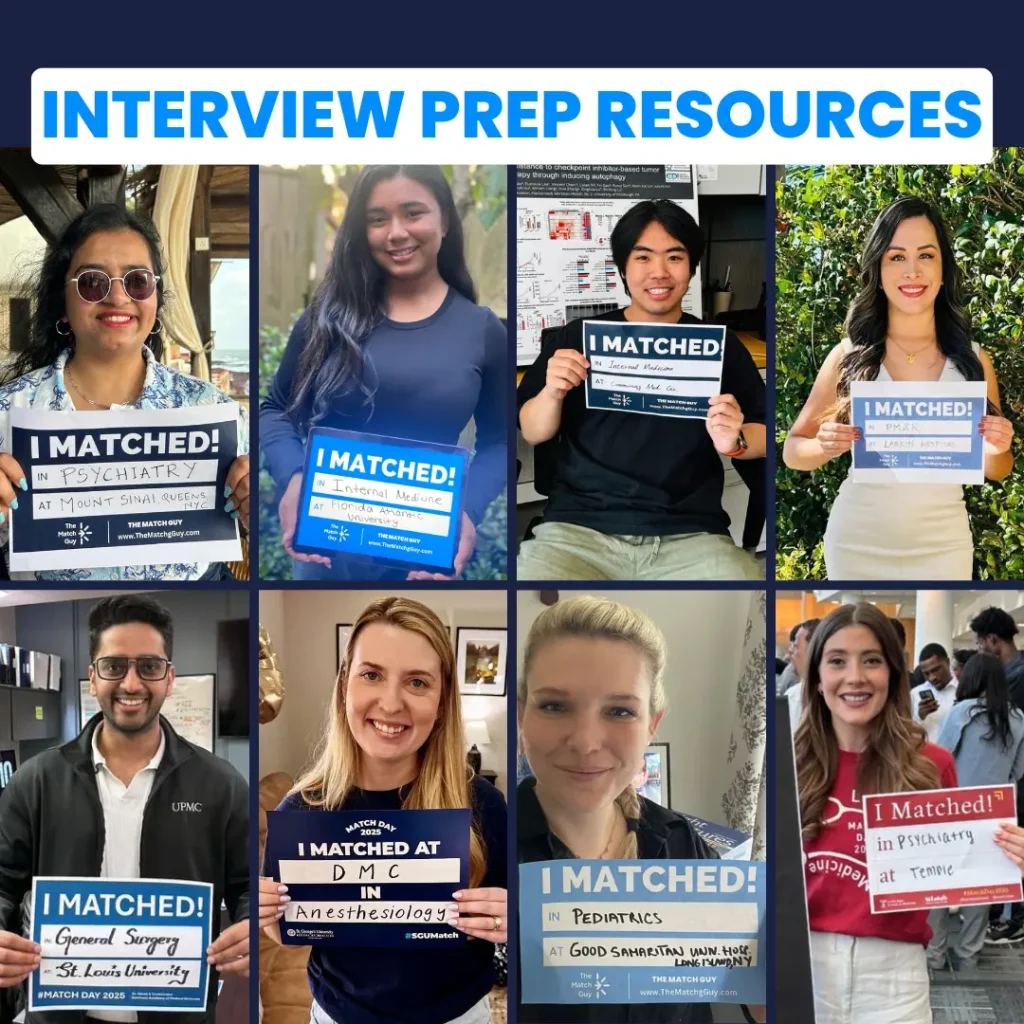
Get access to 250+ residency interview questions, samples of perfect answers for medical residency interview preparation and other resources!
Delivered Right To Your Inbox📨
6. Can you describe a situation where you faced a conflict and explain how you handled it
During my research year, I set up a collaboration with another lab to help us with histology and immunohistochemical staining for my project. As the research progressed, it became apparent that the work required from the collaborating lab was a bit more than initially anticipated, but we assumed this was a good thing as the project was turning out nicely. The graduate student I was working with from that lab put in a significant amount of time and effort and was my key point of contact.
Originally, we had an informal agreement that she’d be a middle author when we published our findings. But as the project took shape, she did so much more than I initially realized. She reached out to me later, suggesting she might be considered as a first author because of all the work she put in.
At first, I was like, “Wait a minute, I’ve been leading this.” But we sat down, had a coffee, and really talked it through. She showed me all she’d done, and it hit me – she totally deserved that recognition.
So, we settled on both of us being co-first authors. It felt right, and it was a great lesson for me in valuing everyone’s input. We’re actually collaborating on more projects now, and I’m very glad we resolved this.
What Do Our MATCH Application Packages Include?

Advisor UNLIMITED Access
We get how stressful the residency match process is, so we're here for you - communicate with your personal advisor ANYTIME you need!

Personal Statement Editing
Our editing includes not only language but also context, structure, and content advising.

ERAS Application Editing
The editing goes beyond language and grammar corrections to structure, design, and content based on your personal story and achievement.

Interview Preparation
The best way to learn something is to do it. That’s why we divide our interview preparation sessions into two parts.
Mock Interview + Feedback
7. What are your plans after residency?
Well, I’ve given this a lot of thought. Right off the bat, my immediate goal is to match into a solid internal medicine residency program. I’m particularly looking for a place that truly values resident education and has a genuine focus on wellness. It’s important for me to be in an environment where learning and well-being are at the forefront.
While I’m still navigating my specific path, I’m leaning towards cardiology or maybe Pulm/CCM for a fellowship. And if I’m looking a decade down the line? I picture myself in a busy academic teaching hospital. I’m passionate about both clinical work and research, so I see myself balancing dynamic clinical practice while also being actively involved in research projects.
On top of that, I’ve always been drawn to teaching and mentoring. I can definitely see myself in a role like a residency program director or maybe even an associate program director, where I can have a direct impact on guiding the next generation of doctors. That’s the dream for me.
Feeling swamped by the complexities of Systematic Reviews? Kickstart your research journey with our comprehensive Systematic Review Course and build your skills with confidence!
8. Tell me about a stressful situation you went through and how you overcame it
I can think of a moment in my first year of med school. I had been managing my Crohn’s disease pretty well for years, and then out of nowhere, right in the middle of my first year, I had a major flare-up. It was so bad that I ended up being hospitalized and had to undergo a partial colectomy. It really felt like the worst possible timing.
It meant missing two major blocks – genetics and biochemistry. And trust me, the thought of being so behind when we had just started medical school was overwhelming. I was grappling with the physical pain and the mental strain of falling behind.
But here’s where I learned the importance of a strong support system. My advisory deans, my instructors, they were all so understanding. They told me to focus on my health first and foremost and allowed me to make up for the missed coursework during the summer at my own pace. That experience really taught me that it’s okay to ask for help and lean on others when you need it. I also realized that, even in those moments when you feel utterly alone, there’s always someone willing to lend a hand or offer support.
If you are looking for comprehensive Residency Interview Preparation Resources📦 for Match 2026/2027, including 250+ residency interview questions, samples to perfect answers for medical residency interview preparation and much more, click here.
9. Tell me about a time that you had to deal with a challenging patient
I remember one time when I was on the wards. We had this patient come in from the clinic, right? She had a surgical site infection and some cellulitis. From the moment she got to the floor, you could tell she was upset. She was quite vocal about her frustrations, getting a bit combative with the nursing staff, and even talked about wanting to leave because she felt she wasn’t getting the care she needed.
So, I rushed up there, wanting to understand and address her concerns. As soon as I entered her room, she started venting her frustrations, and even asked me to leave at one point. It was tough, but I kept my calm and managed to persuade her to stay for the night.
The next morning, I made sure to visit her first thing and dropped by a few more times during the day just to check-in. By the end of the day, her whole demeanor had changed. She thanked me for the frequent visits and shared how it made her feel like we genuinely cared about her well-being. It was a challenging situation, but it reinforced how important good communication can be in patient care.
If you are looking for comprehensive Residency Interview Preparation Resources📦 for Match 2026/2027, including 250+ residency interview questions, samples to perfect answers for medical residency interview preparation and much more, click here.
10. Do you have any questions for me?
- How do you incorporate feedback from residents into the curriculum or rotation structure?
- What opportunities are there for elective rotations, and how flexible are they?
- How does the program support presenting at conferences or publishing?
- How does the program promote work-life balance for its residents?
- Are there wellness initiatives or resources available to residents?
- How is feedback given to residents, and how frequently?
- Can you describe the mentorship system within the program?
- What fellowships are most commonly pursued by residents after graduation?
- How does the program support residents in their fellowship or job search?
Practice interviewing with our experts who trained at top-notch residency programs! If you’re not satisfied, get your money back!

11. Tell me about something interesting about you that wasn’t included in your CV
One interesting aspect of my life is my passion for improv comedy. I’ve been part of a local improv group for three years, performing monthly. It’s taught me to think quickly, adapt to unexpected situations, and communicate effectively—skills that have surprisingly paralleled my medical training. For example, during a patient encounter with sudden complications, my ability to adapt seamlessly came from this experience. It’s an unconventional hobby for a future physician, but I think it has worked well for me thus far.
12. If you had to change one thing about the specialty you are applying to, IM, what would that be?
If I could change one thing about Internal Medicine, it would be to integrate more structured time for wellness and self-care into the training process. The demands of residency can be intense, and while we’re trained to care for others, there’s not always an emphasis on caring for ourselves. I believe implementing scheduled wellness activities, mental health resources, and protected time for reflection would foster more resilient physicians and ultimately improve patient care, as we’d be better equipped to handle the challenges of the profession.
13. If you had to describe the specialty IM (you are applying to) to a friend in three words, how would you describe it?
Challenging, diverse, and rewarding.
14. Tell me about your volunteer activities
I’ve been actively involved in a free clinic that serves uninsured and low-income patients in my community. One experience that stands out was helping a young man who was struggling to make ends meet and had stopped taking his blood pressure medications because he couldn’t afford them. I worked with the team to connect him to an assistance program for affordable prescriptions and arranged reliable transportation for his follow-up visits. Seeing how financial barriers directly affected his ability to manage a chronic condition reinforced for me how central social determinants are to patient outcomes. It also deepened my commitment to internal medicine, where building long-term relationships and addressing the broader context of patients’ lives is key to improving health and equity. Additionally, I volunteered with a food bank during the pandemic, which further emphasized the importance of community partnerships in promoting overall well-being.
15. Tell me about your research
My primary research experience was in a cardiology lab where I investigated the role of inflammatory markers in the progression of heart failure. Through this project, I gained hands-on experience managing large datasets, performing statistical analyses, and interpreting results in a clinically meaningful way. I also learned how to critically evaluate medical literature and integrate new evidence into our ongoing work. Collaborating with a multidisciplinary team taught me the importance of communication and meeting deadlines to move research forward efficiently. These experiences not only strengthened my analytical and organizational skills but also deepened my understanding of how research informs clinical decision-making. They reinforced my goal of becoming an internist who can meaningfully translate scientific findings into better care for patients.
If you are looking for a comprehensive ALL-IN-ONE Application Resource for MATCH® 2026/2027, including ERAS application template, personal statement examples, MSPE samples, LOR examples, and much more, click here.
Watch this to ace your medical residency interview and Match® into your dream program!
16. Tell me about your medical school experience
Medical school was a journey of growth and discovery. I was certainly challenged academically, but it was the hands-on clinical rotations that truly shaped me. Rotating through different specialties, I saw firsthand the impact a compassionate physician can have. I especially enjoyed my internal medicine rotation, where I learned to manage complex cases and appreciated the value of building relationships with patients. I was also active in student organizations, which allowed me to develop leadership skills and connect with peers who shared similar passions.
17. What skills would you be bringing to our program?
I would bring several skills that I believe would add value to your program. Specifically, my experience in a large level one trauma center during my internal medicine observership has taught me how to manage high patient volumes while maintaining quality care. I’ve also developed proficiency in point-of-care ultrasound (POCUS), which I used frequently during my cardiology clerkship in Miami. Additionally, I’m experienced in conducting diabetes management workshops for patients, a skill I’d love to integrate into your patient education initiatives. My adaptability, teamwork, and clinical focus make me confident in my ability to contribute effectively.
18. Why should we choose you instead of other applicants?
You should choose me because I bring a unique combination of resilience, strong clinical experience, and a genuine passion for internal medicine. During my sub-internships and away rotations, I managed complex patients with conditions like decompensated cirrhosis and sepsis, earning strong feedback for my clinical reasoning, initiative, and teamwork. My experiences in safety-net clinics serving uninsured and immigrant populations have strengthened my communication skills and deepened my commitment to providing equitable, patient-centered care.
As a first-generation physician in my family, I’ve overcome academic and personal challenges that have made me adaptable, empathetic, and deeply resilient. These experiences taught me to stay composed under pressure and to approach every patient with humility and understanding. I’ve also led quality improvement initiatives to streamline discharge planning and medication reconciliation, reinforcing my belief in teamwork and systems-based practice.
I’m not just looking to train in your program; I want to actively contribute. I bring a strong work ethic, curiosity, and a dependable presence who supports my colleagues and helps patients feel heard and cared for. My goal is to grow as both a clinician and teammate, and to bring compassion, diligence, and purpose to every patient encounter.
19. If I asked a friend who knows you very well about your best characteristics, how would they describe you?
My friend would probably describe me as incredibly reliable and empathetic. I’ve always been the person who’s there when someone needs support, whether it’s staying up late to help them study or just being a good listener. They’d also mention my sense of humor—I’m the one who can lighten the mood when things get stressful. Lastly, they’d say I’m hardworking and committed; whether it’s preparing for an exam or training for a marathon, I always give 100% to whatever I do.
20. Why did you have a failure on STEP 2CK (if any)?
I faced significant personal challenges around the time of my Step 2 CK exam. My father was hospitalized, and as the primary support for my family, I found myself balancing caregiving responsibilities with medical school demands. During that period, it was difficult to maintain consistent study habits and focus, which ultimately affected my performance.
Afterward, I took time to regroup and reflect on what went wrong; not just academically, but personally. I sought feedback on my test-taking strategies, identified areas of weakness, and adopted a more structured approach to studying. I created a detailed schedule with realistic daily goals, incorporated more active learning techniques, and joined a small study group for accountability and discussion. Most importantly, I learned to set boundaries between family obligations and preparation time so I could be fully present in both roles.
When I retook the exam, I passed with a much stronger score, but more importantly, I came away with greater resilience, discipline, and self-awareness. That experience taught me how to adapt under pressure and how to turn difficult circumstances into opportunities for growth, qualities I carry with me into clinical training.
21. Why do you have a gap between graduating from medical school and applying to residency (if any)?
As an international medical graduate, I finished residency back in my home country and had to work for three years to be able to save some money to afford coming to the U.S. I’m also the sole supporter of my family financially. However, I was involved in clinical work during all that time.
When I moved to the U.S., I took the time to gain relevant experience in the U.S. healthcare system. I completed an internal medicine observership at a community hospital in New York, where I worked closely with attending physicians and a cardiology observership at a clinic in Miami. There I learned about managing chronic cardiovascular conditions.
Additionally, I worked as a research assistant at the University of Wisconsin focusing on diabetes management.
These experiences enhanced my clinical skills and understanding of the U.S. healthcare system and I think have made me a more well-rounded candidate for your residency.
22. As an older graduate (if you are), do you think your age would be an obstacle for you to excel in residency and why?
As an older international medical graduate, I don’t see my age as an obstacle but rather as an asset. My additional years have given me more clinical experience, maturity, and a deeper understanding of patient care. I’ve had the opportunity to work in different healthcare settings, adapt to various challenges, and refine my communication skills with diverse patient populations. These experiences have prepared me to handle the rigors of residency with resilience and adaptability, and I believe they make me well-equipped to excel in the program.
23. As someone who finished prior training (for those who finished another residency prior to applying), do you think it would be difficult to go back to being an intern?
Having completed a prior residency in General Surgery abroad, I recognize that returning as an intern will be an adjustment. However, I believe my previous training has given me strong clinical skills, discipline, and the ability to work under pressure. I’m ready to embrace the role of an intern with humility, knowing it’s a chance to learn and adapt to a new system. My experience has taught me the value of teamwork and the importance of continuous growth, so I’m confident I can excel in this new chapter.
24. What things would you like to change about yourself?
I’d like to continue improving my ability to delegate tasks effectively. During medical school, I helped organize a large student-run health fair, and initially, I tried to oversee every detail myself. As the event planning became more complex, I realized that distributing responsibilities among team members based on their individual strengths made the entire process smoother and more efficient. For example, one classmate with strong design skills handled our promotional materials, while another with prior logistics experience coordinated with vendors and faculty. Seeing how the event came together more successfully when everyone contributed in their area of expertise taught me that delegation isn’t about relinquishing control: it’s about empowering others to perform at their best. Since then, I’ve made a conscious effort to apply that lesson in clinical and academic settings, trusting my teammates and recognizing that effective collaboration leads to better outcomes for everyone, including our patients.
25. Which of your professional deficiencies would you like to improve during residency?
I’d like to improve my efficiency with electronic medical records (EMRs). Coming from a system where documentation was mostly paper-based, I found navigating EMRs challenging initially. I’ve made progress, but I want to become more proficient and faster, as I know this will be crucial during residency. I’m actively learning tips from colleagues and using online resources, and I’m confident that with regular use, I’ll become more adept, allowing me to focus more on patient care.
26. Which of your personal deficiencies would you like to improve during residency?
One area I’d like to continue improving during residency is finding a better sense of balance between work and personal time. I tend to dedicate myself fully to my responsibilities, and I’ve noticed that I sometimes carry the stress of the hospital home with me, often checking charts or thinking through patient cases late into the evening. While that level of dedication can be valuable, I’ve realized it’s equally important to set healthy boundaries to sustain long-term effectiveness and well-being. During my last few rotations of medical school, I made a conscious effort to create more balance, whether by exercising, spending time with friends, or simply disconnecting after a productive day, and I noticed I came to work more refreshed, focused, and empathetic. As I enter residency, I want to continue developing this skill so I can bring my best self to my patients and my team each day.
27. If you could go back in time, is there anything you would like to change on your journey?
If I could go back, I would have prioritized work-life balance earlier in my journey. In medical school, I often put everything else aside for academics, and while it made me a stronger student, I sometimes missed out on personal growth and self-care. If I had managed that better, I believe I could have been even more effective both academically and personally. Now, I’m more mindful of taking time to recharge, and I plan to carry that balance into residency.
28. (For IMGs) As an IMG, what difficulties do you think you will encounter during residency compared to US students?
As an IMG, I anticipate challenges in adjusting to the nuances of the US healthcare system, such as EMRs, the pace of residency, and cultural differences in patient care. Building rapport with patients may take more effort due to language barriers or unfamiliarity with the system. Additionally, adapting to the team-based structure in residency programs could be different from my prior experiences. However, I’m confident that my diverse clinical background and eagerness to learn will help me overcome these hurdles and succeed
29. What are you looking for in a program?
I’m looking for a program that emphasizes a balance between strong clinical training and a supportive learning environment. A program with diverse patient populations and a focus on evidence-based medicine would be ideal, as it would help me grow both clinically and personally. Additionally, I value mentorship and programs that offer structured opportunities for career development, whether in research, teaching, or leadership. Lastly, a collaborative and inclusive atmosphere is important to me, where residents are encouraged to support each other and grow together.
30. Our program has an extensive focus on research output and scholarly activity. I see you don’t have much research experience. How do you think you’ll be able to contribute to our program despite your lack of experience?
While I don’t have extensive research experience, I bring strong clinical skills, a curiosity for learning, and a willingness to dive into new challenges. I’ve worked on smaller quality improvement projects and I’m eager to engage in more formal research. I believe my clinical experiences have given me a solid foundation in understanding patient care, and I’m excited to collaborate with faculty and peers to contribute meaningfully to research. I’m committed to learning and applying research principles to positively impact patient outcomes and advance knowledge in the field.
Get access to 250+ residency interview questions, samples of perfect answers for medical residency interview preparation and other resources!
Claim your FREE Interview Preparation Resources here!
Unlock your research potential with our dynamic course designed for medical students and graduates! Built by an experienced clinical researcher with 150+ publications and 3000+ citations!

31. Which is more important to you, clinical experience or research?
Both clinical experience and research are important, but for me, clinical experience holds a slight edge. Direct patient care is what drew me to medicine in the first place, and it’s where I believe I can make the most immediate impact. That said, I understand the importance of research in advancing medical knowledge and improving patient outcomes. I’m eager to develop my research skills during residency, but my primary focus will always be providing high-quality care to patients while applying the latest evidence-based practices.
32. Where do you see yourself in 5/10 years?
In 5 years, I see myself as a well-rounded physician, having completed my residency and possibly working in a clinical setting where I can apply the skills I’ve developed. I hope to be involved in mentoring younger residents and contributing to patient care improvements.
In 10 years, I envision myself as an attending physician, possibly pursuing a leadership role or academic involvement, where I can integrate teaching, clinical practice, and research. I also aim to contribute to initiatives that improve healthcare access and quality for underserved populations.
33. Do you want to do a fellowship after you finish residency? What type?
I’m open to the idea of pursuing a fellowship after residency, but I want to gain more clinical experience first to make an informed decision. Right now, I’m particularly interested in cardiology because of my prior exposure to cardiovascular research and patient care, though I’m also drawn to fields like endocrinology and infectious disease. I recognize that the foundation of being an excellent subspecialist begins with becoming an outstanding internist; someone who can think broadly, manage complexity, and care for the whole patient. That’s why my focus in residency is on building strong clinical skills and judgment through comprehensive internal medicine training. I’m confident that your program’s depth of exposure, mentorship, and academic rigor will provide the ideal environment to develop those core skills and position me for success in whichever path I ultimately pursue.
34. Do you want to be involved in teaching during your future career? And why?
Yes, I definitely want to be involved in teaching during my future career. Teaching has always been something I enjoy, whether it’s helping fellow students or explaining concepts to patients. I believe teaching reinforces my own learning and challenges me to stay updated on the latest medical advances. Plus, I’m passionate about mentoring, and I see it as a way to give back, helping to shape the next generation of physicians. Being part of a learning environment keeps me engaged and continuously growing as a physician.
35. Would you want to practice inside or outside of the US?
I plan to practice inside the US, as I’ve become familiar with the healthcare system here through my clinical experiences and training. I appreciate the diverse patient populations, the emphasis on evidence-based medicine, and the opportunities for professional development. However, I’m also open to maintaining connections with healthcare initiatives abroad, particularly in underserved areas, where I can use my skills to contribute to global health. Practicing in the US offers the stability and resources I need to grow as a physician while still allowing me to have a broader impact.
36. Do you want to practice in academia or private practice? And why?
I’d like to practice in academia because it offers a dynamic balance between patient care, teaching, and research. I’m passionate about staying at the forefront of medical advancements and sharing that knowledge with residents and medical students. Being in an academic setting would allow me to engage in continuous learning and contribute to the growth of future physicians. Additionally, I value the collaborative nature of academic medicine, where there’s an opportunity to work with other specialists on complex cases and engage in meaningful research that can improve patient outcomes.
37. How do you think you will be contributing to the specialty (you’re applying to)?
I believe I’ll contribute to internal medicine by focusing on patient-centered care, particularly in managing complex, chronic conditions like diabetes and heart disease, areas I’ve developed a strong interest in. I’m also eager to engage in quality improvement projects to streamline patient care and reduce hospital readmissions, based on my past experiences. Additionally, I’m passionate about mentoring, and I’d love to help train the next generation of residents by sharing clinical insights and fostering a supportive learning environment for both students and colleagues.
38. Do you want to become a leader in your field?
I do see myself stepping into a leadership role within internal medicine, but not in the traditional sense of administration. I’m particularly interested in advocating for health equity and improving access to care for underserved communities. I want to lead initiatives that address healthcare disparities while still being hands-on with patient care. I also see myself leading by example in mentoring residents and students, helping them grow into compassionate, competent physicians, while fostering a collaborative and inclusive environment in whatever setting I practice.
39. What is your backup plan if you do not match this year?
If I don’t match this year, my immediate plan is to continue gaining clinical experience through observerships or externships in the US to strengthen my application. I’d also consider research opportunities, particularly in internal medicine, to expand my academic profile. I’d focus on improving any areas of my application that may need attention, like preparing for interviews or revisiting my personal statement. Additionally, I’d seek out mentorship from physicians who can provide guidance on how to enhance my candidacy for the next application cycle.
40. What do you like to do for fun?
For fun, I enjoy staying active and exploring the outdoors, whether it’s hiking, biking, or going for a run. It helps me recharge and clear my mind after a busy week. I also love cooking and trying out new recipes, especially dishes from different cultures. On quieter days, I like to read, mostly non-fiction or medical literature, and spend time with family and friends. These activities keep me balanced and allow me to stay connected with the people and hobbies that matter most to me.
41. What is your favorite book?
My favorite book is Man’s Search for Meaning by Viktor Frankl. It’s a powerful reminder of resilience and finding purpose in difficult situations, which resonates deeply with the challenges of residency. Frankl’s message of perseverance through adversity and the importance of having a sense of purpose mirrors the demands of medical training. It reminds me that no matter how tough residency might get, maintaining perspective and focusing on the bigger picture—caring for patients and growing as a physician—will help me push through.
42. What’s your favorite movie? Tell me a little bit about it.
My favorite movie is The Pursuit of Happyness. It’s about a man who, despite facing numerous obstacles and hardships, remains determined to create a better life for his son. What I admire most is the protagonist’s resilience and relentless perseverance, traits that are crucial in residency. The movie demonstrates how maintaining hope and determination, even in the face of overwhelming challenges, can lead to success. It’s a reminder that no matter how difficult things get, hard work and dedication will always pay off in the end.
43. If you had free plane tickets to go anywhere, where would you want to go?
If I had free plane tickets, I’d love to go to Japan. The blend of modern innovation and deep-rooted traditions fascinates me. I’ve always been interested in Japanese culture, from the tranquility of temples and gardens to the vibrant energy of Tokyo. I think it would be a great place to explore, reflect, and even draw parallels to residency—balancing the fast pace of medicine with moments of mindfulness and calm, much like the juxtaposition of modern and traditional life in Japan.
44. Tell me a fun fact about yourself.
A fun fact about me is that I’ve taken up pottery as a hobby. I enjoy the hands-on, creative process of shaping something from a simple block of clay. It’s surprisingly therapeutic and has taught me patience and precision, skills that I find helpful in medicine as well. Plus, it’s always satisfying to see the end result after putting in the time and effort, much like working through complex medical cases in residency.
As you journey towards securing your ideal residency position, remember that preparation is your most valuable asset. We hope this guide illuminates the path ahead, providing you with clarity and confidence.
45. If applicable: Tell me about a setback you faced. How did you grow? What did you do during this time?
During my preclinical years, I faced a major setback when I did not pass Step 1 on my first attempt, which delayed the start of my clinical rotations. It was an incredibly humbling experience, but one that became a turning point in how I approached learning and growth. I sought structured coaching to identify my knowledge gaps, enrolled in a dedicated prep course, and completely restructured my study habits. I created a disciplined daily schedule, increased my study hours, and used active learning tools like Anki and spaced repetition to strengthen long-term retention.
Through this process, I learned how to assess my own weaknesses objectively, stay consistent, and adapt my strategies based on results. When I returned to clinical rotations, those same skills translated directly into my clinical learning; I became more organized, proactive, and efficient at processing and applying new information in real time.
That experience taught me perseverance and humility, but also how to transform setbacks into structured growth. It made me a more self-aware, adaptable, and teachable trainee, qualities that continue to shape how I learn from patients, colleagues, and mentors every day.
46. What are you looking for in a program?
I am looking for a residency program that offers a supportive clinical environment where I can challenge myself while knowing I have strong mentorship and guidance. I value programs that balance responsibility with graduated support, allowing me to grow in independence while always feeling part of a team.
Exposure to a wide range of subspecialties is also important to me, as it helps refine my career direction while ensuring I develop into a well-rounded physician. I hope to train in a program that emphasizes both clinical and academic growth, one where research opportunities are accessible and where faculty are invested in mentorship.
Finally, I am passionate about teaching and see residency as an important time to grow as an instructor. I look forward to working with medical students and junior trainees, not only to strengthen their learning but also to deepen my own skills as an educator. Overall, I seek a program where the culture fosters curiosity, collaboration, and continuous growth both inside and outside the hospital.
47. Tell me about a situation during medical school which demonstrates your team player skills
During my sub-internship, I learned how much impact small, behind-the-scenes efforts can have on the whole team. I made it a point to arrive early, print out rounding reports, and keep detailed notes on action items for each patient so nothing slipped through the cracks. Throughout the day, I stayed in close contact with the nurses to make sure everyone was on the same page about the care plan, and I often messaged consultants on behalf of the interns and residents to help expedite care. I also called families when updates were needed so that my teammates could focus on clinical tasks.
By doing these things, I wasn’t just trying to be helpful, I was making sure the team could run more smoothly and that patient care moved forward without delays. It showed me that being a team player isn’t always about the big, visible contributions; it’s about anticipating needs, taking initiative, and supporting others so that together we can deliver the best care.
48. How would you deal with a difficult or challenging senior team member or attending?
If I found myself working with a difficult senior team member or attending, I would first remind myself to approach the situation with humility and respect. Everyone carries their own pressures and often challenges come from stress rather than intent. If I needed to address something directly, I would use “I” statements: for example, “I felt unsure about the plan when X happened,” rather than making accusations. That way, I can share how their actions affected me without attributing motives or sounding confrontational.
I would also focus on listening carefully to their perspective and clarifying expectations, since misunderstandings can often be resolved by simply communicating more openly. My goal would be to approach the conversation not as a conflict but as an opportunity to build understanding and reduce stress for the team. Ultimately, I would want to keep the focus on patient care and show that I am committed to supporting the team and learning from the experience.
49. Are you a hard-working person? And why?
Yes, I would describe myself as a hard-working person, but for me, it’s not just about putting in long hours, it’s about being consistent and intentional. In medical school, I had to balance clinical responsibilities with research, leadership roles, community involvement, and still make time for my own wellness. What helped me succeed was developing routines and patterns that kept me organized and grounded.
I’ve learned how to prioritize time-sensitive responsibilities without losing sight of long-term goals, and to approach each task with focus rather than just trying to do everything at once. That discipline has allowed me to contribute meaningfully both in and outside the hospital while still showing up as my best self for patients and colleagues. To me, hard work is about consistency, organization, and resilience—qualities I bring to every role I take on.
50. Tell me about a situation which demonstrates your leadership skills.
One of the best examples of my leadership was serving as Student Council President. In that role, I often found myself balancing two sets of expectations: the hopes of my classmates and the realities of what the administration could actually deliver. I saw my job as being both an advocate and a bridge.
There were times when I stood firmly for my peers, making sure their voices were heard and their concerns taken seriously. At other times, leadership meant having honest conversations with classmates, leveling with them about what could realistically be accomplished, even when it wasn’t the outcome they wanted. Those moments taught me that leadership isn’t just about pushing forward; it’s about trust, accountability, and sometimes being the one to deliver hard truths with transparency and respect.
The experience showed me that being a leader means standing up for those who put their trust in you, while also managing expectations and keeping the bigger picture in mind.
51. How do you think you receive criticism?
I try to receive criticism with humility and grace. I remind myself that feedback is usually given with the intention of helping me grow, and if I become defensive, I only risk stagnating. Instead, I see it as an opportunity to identify blind spots and refine my skills.
I make a conscious effort to look for ways to put feedback into action right away, whether that’s adjusting how I present on rounds, improving communication, or refining a technical skill. I also actively seek feedback, because I’ve found that the times I’m most engaged in the process, asking questions, clarifying expectations, and applying the advice, are when I grow the most.
For me, criticism is not something to fear but something to welcome, because it pushes me closer to the physician I want to become.
52. How would you give feedback to a trainee that was struggling?
If I were working with a trainee who was struggling, I would start by creating a supportive environment and inviting them to share their own perspective. I’d ask what they feel is going well and what they think has been more challenging. This helps me understand their insight and keeps the conversation from feeling one-sided or judgmental.
I’d make sure to highlight specific things they’re doing well, so the feedback feels balanced and constructive, not discouraging. From there, I’d work with them to identify a few focused areas for improvement and offer clear, actionable steps they can take. I think it’s also important to establish a follow-up plan or timeline so they know I’m invested in their progress and not just pointing out weaknesses.
My goal would be to make the conversation collaborative and growth-oriented—helping the trainee see that feedback isn’t a reprimand, but a chance to learn, improve, and feel supported along the way.
53. Tell me about a patient interaction you did not handle well.
During one of my inpatient rotations, I cared for a patient who became upset after learning he’d need to stay an extra day for a procedure. In his frustration, he raised his voice at the nurse, who had simply been relaying information from the team. I was present but didn’t intervene in the moment because I was worried about escalating the situation and thought it best to de-escalate quietly.
Afterward, I saw how shaken the nurse was, and I realized I had missed an important opportunity to set the tone for respectful communication. By staying silent, I inadvertently allowed unkind behavior toward a teammate to go unchecked. Since then, I’ve learned that professionalism sometimes means speaking up, even in uncomfortable moments, to protect the culture of respect and teamwork that ultimately benefits patient care.
That experience taught me that supporting colleagues in real time is just as important as supporting patients, and I now make a conscious effort to model and reinforce respectful communication, even during stressful situations.
54. Tell me about a time you helped navigate grieving with a patient and/or their family.
During my ICU rotation, I cared for a patient who had endured a long, complicated hospital course with multiple intubations, infections, and weeks on life support. As her condition worsened due to sepsis, she expressed that she no longer wanted aggressive treatment and wished to focus on comfort care. Her children were devastated and initially struggled to accept her decision.
I took time to sit with them, listen to their fears, and acknowledge how difficult it was to see someone they love make that choice. I explained, gently, that their mother’s decision came from a place of exhaustion, not hopelessness, and that the most loving thing they could do was to support her in finding peace and dignity in her remaining time.
That experience reminded me that helping families navigate grief isn’t just about explaining medical options, it’s about being present, empathetic, and helping them find meaning in their loved one’s wishes. It deepened my understanding of the human side of medicine and the quiet strength that comes with supporting patients and families through loss.
55. Tell me about a situation in which you went the extra mile.
During my rotation in the SICU, I was caring for a patient who had suffered devastating neurologic injury and was declared brain dead. Although I wasn’t the primary team member responsible, I noticed that the family was struggling to understand the situation and hadn’t yet had a coordinated goals-of-care discussion with all the consultants involved. I took the initiative to help organize that meeting.
Over the next several hours, I contacted the neurosurgery, critical care, and trauma surgery teams, as well as the nursing staff, to ensure everyone who played a role in the patient’s care could be present. I also reached out to the family to coordinate a time that worked for them and to make sure their questions and concerns would be addressed.
It was emotionally heavy, but I wanted to make sure the family heard consistent, compassionate information from all the right people. In the end, the meeting helped them make an informed decision and brought a sense of clarity and closure. That experience reminded me that “going the extra mile” in medicine often means taking ownership—not just of tasks, but of communication and compassion when patients can’t speak for themselves.
56. Tell me about the most impactful lesson you learned from your mentor(s) during medical school.
One of the most impactful lessons I learned came from a senior resident I worked with during my surgery rotation. What stood out to me wasn’t just his technical skill, it was his humility. He made a point of learning from everyone on the team, regardless of their title or role. He would ask discharge planners how to better prepare patients for going home, learn small workflow tricks from scrub techs, and take bedside nurses’ feedback seriously about how to make care more seamless.
Watching that changed how I viewed teamwork and professional growth. He showed me that excellence in medicine doesn’t come from hierarchy, but rather it comes from curiosity, collaboration, and respect for every member of the care team. That attitude not only made him incredibly efficient and technically skilled but also built trust across the team and ultimately improved patient care.
Since then, I’ve tried to carry that same humility into my own training, always looking for opportunities to learn from those around me, no matter their role.
57. Tell me about a mistake you made in medical school and what you learned from it?
Early in medical school, I made the mistake of waiting until the last minute to complete my portion of a group project. By the time I started, I realized there were elements of my section that couldn’t be finished properly before the deadline, which ultimately caused the entire submission to be late and negatively affected the team. I took full responsibility, apologized to my group, and spoke directly with the professor. Fortunately, we were granted a one-time extension, but the experience was humbling.
It taught me a lasting lesson about accountability and the ripple effect of my actions on others. Since then, I’ve made it a priority to stay organized, set early personal deadlines, and communicate progress clearly. That approach has translated directly to my clinical work, being timely and proactive when following up on labs, writing notes, or coordinating care has helped my teams run smoothly and avoid unnecessary delays. I learned that reliability isn’t just about meeting your own goals; it’s about supporting the success of the entire team.
58. What challenges do you expect to encounter during the first year of residency?
I think one of the biggest challenges will be managing time effectively by balancing the long, often unpredictable hours of residency with the need to stay academically sharp and personally grounded. The first year comes with a steep learning curve, new responsibilities, and very little downtime, so I expect it will take deliberate effort to maintain balance.
Studying for the in-training exam and boards, staying engaged with research, and keeping up with clinical demands will all require strong organization and discipline. What gives me confidence is that I’ve already built those habits in medical school—setting structured schedules, using downtime efficiently, and protecting time for wellness. Practices like running and yoga have been really important for me, not just for stress relief but for keeping my energy and focus steady.
I know residency will be demanding, but I plan to rely on those same habits, staying organized, asking for help when needed, and maintaining perspective, to keep myself balanced and at my best for my patients and my team.
59. Burnout is common in medicine. What do you do to avoid burnout?
I’ve learned that avoiding burnout starts with self-awareness, recognizing early when I’m feeling overwhelmed and taking proactive steps before it escalates. I’ve built a strong support system of friends, mentors, and my spouse who I can talk to openly. Having people who can act as a sounding board helps me process challenges and regain perspective.
Outside of medicine, I make time for activities that completely take my mind off work. Exercise has always been a big outlet for me, I enjoy running and playing tennis with my spouse, which helps me recharge both physically and mentally. I’ve also learned that rest isn’t a luxury; it’s essential for showing up fully for patients and colleagues.
By being intentional about balance, seeking support when needed, and maintaining activities that keep me grounded, I’ve been able to sustain my motivation and sense of purpose, even during demanding times.
60. Tell me about a misunderstanding/miscommunication that happened during your clinical rotations.
During my internal medicine rotation, we had a patient who was supposed to get a CT scan to evaluate for possible intra-abdominal infection. During rounds, the resident mentioned the order, and both the sub-intern and I assumed the other would place it. Because it wasn’t explicitly assigned, the order was never entered. By the next morning, the patient’s condition had worsened, and imaging revealed a collection that required drainage.
It was a humbling reminder of how small communication gaps can have real consequences for patient care. The issue wasn’t anyone’s negligence; it was a breakdown in clarity and closed-loop communication. Since then, I’ve made a conscious effort to clarify responsibilities in real time, even if it means briefly speaking up to confirm, “Just to make sure, would you like me to place that order?”
That experience taught me that effective communication isn’t just about listening; it’s about closing the loop, confirming understanding, and feeling comfortable enough to clarify in the moment. It’s a lesson I’ve carried with me on every team since.
61. What impact would you like to have on our specialty?
I hope to be known as a clinician who combines knowledge, technical skill, and compassion in equal measure, someone patients and colleagues alike can rely on. I want to develop into a physician who delivers excellent, evidence-based care while also maintaining the humility and kindness that make patients feel heard and supported.
Beyond clinical work, I also hope to make an impact as a teacher. I’ve always valued mentors who were approachable and who helped me identify my gaps in understanding without ever making me feel inadequate. That’s the kind of educator I aspire to be; someone who empowers learners, builds their confidence, and fosters curiosity.
Ultimately, I want my impact on the specialty to be defined by consistency: showing up every day as a reliable teammate, a thoughtful teacher, and a clinician who elevates both patient care and those learning beside me.
62. Why are you dual-applying IM and FM?
Honestly, I was torn between Internal Medicine and Family Medicine. Both appealed to the same parts of me; the desire to build long-term relationships with patients, manage complex conditions, and serve as a dependable first point of contact in someone’s care. I didn’t want to make a decision I might later regret, so I made sure to get real exposure to both specialties before committing.
In Internal Medicine, I loved the complexity of inpatient care and the intellectual challenge of managing multi-system disease. In Family Medicine, I appreciated the continuity, the emphasis on preventive care, and the ability to care for entire families across generations. Each gave me a sense of purpose but from a slightly different perspective.
At the end of the day, I realized I could see myself thriving in either environment. Dual applying isn’t about being unsure, it’s about recognizing that both paths reflect who I am as a clinician and the kind of impact I want to have. I’m looking for a program that values curiosity, compassion, and comprehensive patient care, qualities that define both fields.
63. Why are you dual-applying IM and neurology?
Honestly, I was torn between Internal Medicine and Neurology. I’ve always been fascinated by the diagnostic reasoning and complexity both specialties demand, and I didn’t want to make a choice I might regret later. I decided to do rotations in both before committing, and what I found was that each field offered something unique that resonated with me.
In Internal Medicine, I loved the breadth of pathology and the continuity of care; seeing how small clinical decisions ripple through a patient’s overall health. In Neurology, I was drawn to the precision of localization and the sense of discovery in unraveling the source of symptoms. Both challenged me intellectually and emotionally and both felt deeply fulfilling.
In the end, I realized I would be happy building a career in either field. Dual applying isn’t about indecision, it’s about respecting both paths enough to give each a fair, honest chance. I want to train in a place where I can keep growing as a clinician and find the setting where my strengths and passions align best.
64. Which is more important to you, clinical experience or research?
Community Program Answer: For me, clinical experience is ultimately more important. At the end of the day, we train to be physicians, and our purpose is to care for people. Patients aren’t statistics; they’re complex individuals with emotions, fears, and goals that can’t always be captured in a study. The human connection we build at the bedside is what gives meaning to everything else we do.
That said, I see research as an essential complement to good clinical care. Evidence guides our decisions, helps us question assumptions, and improves outcomes. But it’s the clinical experience that allows us to apply that knowledge in a way that’s compassionate and personal. Research can tell us what should work; clinical experience teaches us how to make it work for the person in front of us.
So, while I value research deeply, clinical experience will always come first, it’s the foundation that gives research its purpose.
Academic/Research Program Answer: For me, both clinical experience and research are deeply important, but I believe research is what ultimately drives medicine forward. Clinical experience allows us to connect with individual patients and apply what we know compassionately, but research is what allows us to take those experiences and turn them into broader improvements that can impact thousands of lives.
Research gives us the tools to question existing practices, identify patterns across large populations, and develop new interventions that shape the future of patient care. It’s how we transform individual clinical insights into evidence-based standards that improve outcomes for everyone.
That said, the two go hand in hand. The best research is rooted in clinical curiosity; seeing patterns at the bedside and wanting to understand why. And the best clinicians are those who stay engaged with research, using evidence to guide care thoughtfully.
So while clinical experience keeps me grounded in the human side of medicine, I see research as the engine that drives meaningful, lasting progress, and I’m excited by programs that value and integrate both.
65. What aspect of your personality do you not like?
I think the part of my personality I struggle with most is my tendency toward perfectionism. I have a strong drive to know everything: to understand every clinical detail, recall studies off the top of my head, and master new procedures immediately. When I fall short of that, I can be overly critical of myself.
While that mindset pushes me to keep improving and deliver high-quality work, I’ve also learned that medicine is a lifelong learning process, and residency is called training for a reason. No one expects perfection on day one. Over time, I’ve learned to channel that same drive into growth: asking for feedback, celebrating progress, and being kinder to myself when I make mistakes.
It’s a balance I’m still refining, but learning to see imperfection as part of becoming a better clinician has made me both more resilient and more empathetic—with myself and with others.
66. What do you think makes a good resident?
First, curiosity, being a constant learner, is essential. The best residents are the ones who don’t just do things because they’re told to, but who ask why. That curiosity drives better understanding and ultimately leads to better patient care.
Second, diligence and timeliness are key. Residency is about teamwork, and being organized and proactive keeps the whole team running smoothly. When you’re on top of your responsibilities, you’re not just helping your patients, you’re also making your co-residents’ and attendings’ lives easier, which strengthens the team as a whole.
Finally, compassion matters, not just for patients, but for colleagues. Residency can be stressful, and small gestures of kindness toward your peers can make a huge difference. Supporting each other helps maintain morale and keeps everyone focused on why we’re here in the first place: to care for patients.
So, to me, a good resident is someone who’s curious enough to learn deeply, diligent enough to execute reliably, and compassionate enough to lift up the people around them.
67. Tell me about a time you had to give bad news to a patient.
During my trauma rotation, I was involved in a case where we had to tell a patient she would be paraplegic after a severe accident. I was with the fellow and the patient’s family when we delivered the news. The moment was incredibly heavy, the patient was tearful and in shock, and there was nothing we could say to make it better.
What I learned from that experience was the importance of simply being present in those moments. My instinct at first was to want to fix things, to find the right words or solutions, but sometimes what patients need most isn’t immediate answers. They need space to grieve, to express fear, anger, or disbelief, and to know that their care team is there to listen and support them through it.
That encounter taught me that empathy isn’t always about speaking; it’s about presence, patience, and honoring the humanity in the moment, even when you can’t change the outcome.
68. What do you when you receive feedback that you do not think is accurate?
When I receive feedback that I don’t immediately agree with, my first instinct is to pause and really listen before responding. I’ve learned that even when feedback feels misplaced or inaccurate, it usually comes from someone’s perception of how I’m showing up, and that perception is still valuable.
I take time to reflect on what was said, try to understand where it might be coming from, and look for any element of truth or growth opportunity in it. Sometimes, that reflection helps me recognize blind spots I wasn’t aware of. And even if I ultimately conclude the feedback isn’t accurate, the process itself is useful, it teaches me to communicate more clearly, to adapt, and to view feedback as a learning tool rather than criticism.
In the end, I see all feedback, accurate or not, as a chance to learn something new about myself and become a more self-aware and effective team member.
69. What do you do when you feel disappointed?
During medical school, I applied for a leadership position that I had worked hard toward and truly felt qualified for, but I didn’t get it. I was disappointed and, honestly, a little deflated. I let myself feel that for a bit, and I talked about it with mentors, classmates, and family members. Those conversations helped me process what happened and reminded me that disappointment is a normal part of growth.
I realized it was important not to dwell on the setback or pity myself, but to reflect on what I could do better next time. I worked on strengthening my CV, sought more mentorship, and focused on developing new leadership experiences. When I reapplied the following year, I was selected for the position.
That experience taught me that disappointment doesn’t have to define you, it can redirect you. Taking time to acknowledge the feeling, then channeling it into self-improvement, has become one of the ways I stay resilient when things don’t go as planned.
70. What advice would you give to an 18-year-old version of yourself?
If I could give my 18-year-old self advice, I’d tell myself not to be afraid of failure. For a long time, I hesitated to pursue certain opportunities, research projects, leadership roles, positions, because I didn’t think I was qualified enough. Looking back, I realize I missed out on experiences that could have helped me grow simply because I doubted myself.
I’ve learned that failure isn’t something to fear, it’s one of the most powerful teachers we have. Every time I’ve stepped outside my comfort zone, even when things didn’t go perfectly, I came away more confident and capable. I’d remind my younger self that growth doesn’t come from waiting until you’re “ready,” it comes from trying, learning, and improving.
While I’m happy with where I am now, I’ve learned that taking risks and embracing failure as part of the process leads to far greater success than holding back out of fear.
If you need help preparing for residency interviews, check out our residency interview preparation services HERE. Our Residency Interview Preparation Service is 100% satisfaction guaranteed.
Best of luck and may your passion and dedication shine through in every interview.
Residency Interview Coaching for Match® 2026/2027
Mock sessions and real-time feedback with our Expert Interviewers!

Need Help?
About TheMatchGuy
TheMatchGuy is a premier medical consulting firm trusted by over 35,000 students and doctors worldwide. Known for our track record and specialization in helping MATCH® Applicants secure residency spots at programs in the United States 🇺🇸 and exceptional guidance in Research, USMLE prep, and clinical experience services. Learn more about how they can help you achieve your career goals. Schedule a discovery call for FREE now.
Personal Statement Editing
Our editing includes not only language but also context, structure, and content advising.
ERAS & Supplemental CV
The editing goes beyond language and grammar corrections to structure, design, and content advising based on your personal story and achievement.

Interview Preparation
The best way to learn something is to do it. That’s why we divide our interview preparation sessions into two parts:
Mock Interview + Feedback

Residency
Advising
We are able to provide you with the guidance you need at any step of your journey to make it to your final goal!