
Match Application Blog
ERAS Application 2026 Guide!
How to Fill Out ERAS Residency Application?
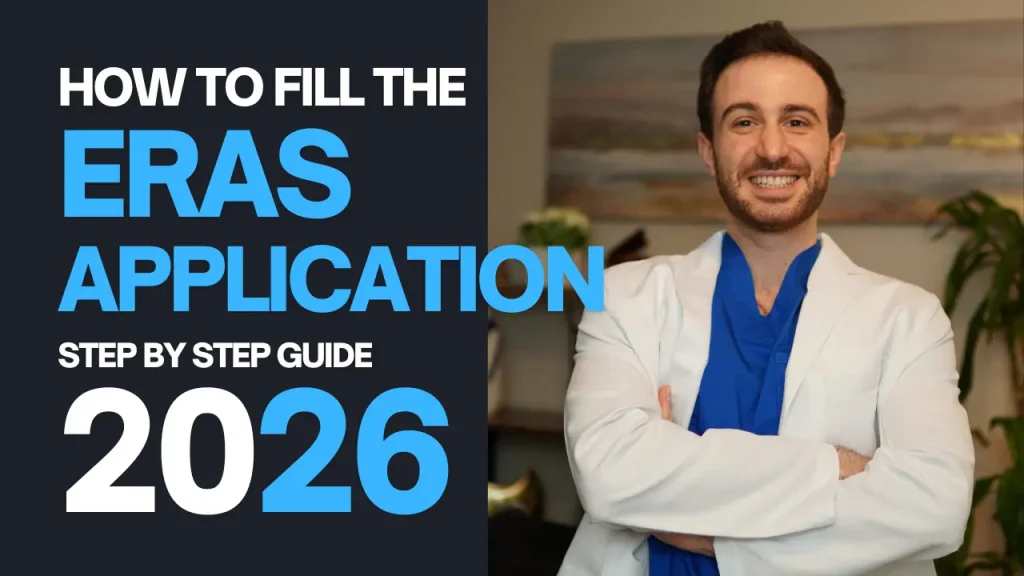

I hope you enjoy reading this blog post.
If you want my team to help you with ERAS application editing, click here.
Updated July 2025
Greetings, dear MATCH® Applicants! I hope you are ready to start drafting your ERAS application. Your ERAS CV (including Experiences and Publications) is a crucial part of your Match application and serves to highlight your unique skills and accomplishments. Let’s delve into the specifics of crafting an exceptional ERAS application and help your application stand out from the crowd.
Before we start, if you are looking for a full ERAS Application Template including samples of Experiences, Education, Geographic Preferences, Publications, and Personal/Biographic Information, sign up here!
We also have detailed guides on 2026 ERAS Application Updates, how to write your personal statement, and 200+ residency interview questions.
Table of Contents
What is the ERAS Application?
The ERAS (Electronic Residency Application Service) Application is a unified online platform used by medical students and graduates to apply for residency programs in the United States. It collects your personal, educational, and professional information into one profile, which program directors can then review.
How do I get an ERAS application? How to register for ERAS?
IMGs will get their ERAS token from ECFMG. U.S. students will get their ERAS token from the Designated Dean’s Office at their medical school.
When should I submit my ERAS application? What time is ERAS due?
While there is no specific deadline to submit your ERAS application, it is highly recommended to submit your application before programs begin reviewing them, which starts September 24, 2025, at 9 AM EST for Match 2026 applicants.
Applicants are able to start submitting their applications starting September 3, 2025. So any time between September 3 and September 24 would be ideal.
Be mindful that letters of recommendation take a longer time to show on the system after a letter author uploads it (around a few days).
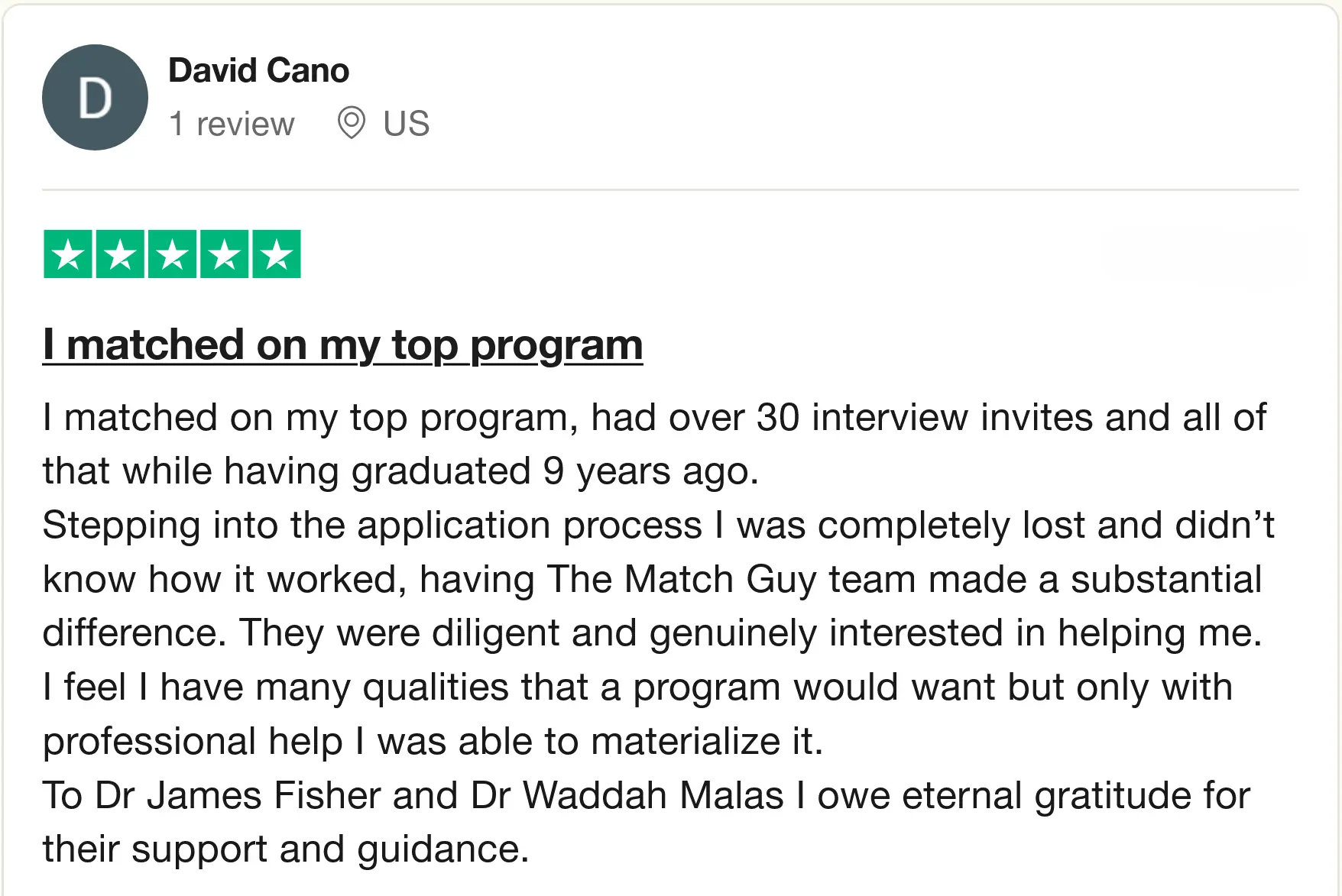
Do You Want to be Part of Our Match Success Stories?
Can I submit my ERAS application late?
Although you are able to submit your ERAS application late, this is not recommended. If you submit your application after a certain program starts reviewing applications, your application won’t be shown to that program. Different programs have different dates on which they decide to check all applications.
When should I start drafting my ERAS Application?
The best time to start is now! Start brainstorming about your Experiences as early as possible, focusing on the positions, events, and activities that shaped you as a physician. Over time, you can tailor that list to emphasize the skills and experiences most relevant to your specialty of choice.
Is there a difference between submitting my ERAS application on September 24 or an earlier date?
No, because they will all be stamped by the same time, which is Sep 24, 2025, 9 AM EST.
ERAS and Match 2026 Timeline
| June 4, 2025 at 9 a.m. EST | You can obtain your ERAS token, start completing your ERAS application, and request LORs. We recommend you start requesting LORs as early as possible. Doctors are very busy and need time to write a good LOR for you. |
| Sept 3, 2025 at 9 a.m. EST | You can start applying to programs. |
| Sept 24, 2025 at 9 a.m. EST | Programs can begin reviewing applications. To ensure your application is reviewed among the first batch, we suggest you submit it before this date. |
| Feb 2, 2026 at 12 p.m. EST | Ranking Opens. Applicants can complete their Rank Order List. |
| Mar 4, 2026 at 9 p.m. EST | Rank Order List Certification Deadline. Also, the IMG applicant deadline to meet ECFMG verification requirements. |
| Mar 16, 2026 at 10 a.m. EST | Applicants know if they matched or not. |
| March 20, 2026 at 12 p.m. EST | Match Day: Applicants will find out where they matched. |
Important Timeline Considerations:
- There will be no difference between submitting your application between Sept 3, 2025, and Sept 24, 2025. When applications are released to programs for review, they will all be time-stamped Sept 24, 2025.
- Applications may be submitted after September 24, 2025; however, the later an application is submitted, the lower the chances of it being reviewed and receiving interview invitations.
What’s new in ERAS 2026?
✅ Program Signaling Information and Updates
✅ Education Section Updates
✅ New Section: Specialty Questions
✅ Pilot Projects for the 2026 ERAS® Season
You can check our other blog to learn about the new changes to the 2026 MyERAS Application. Read here!
Our Clients’ Success Speaks to Our Premium Service!
Now we will go over the following sections of the ERAS application:
Experiences
This is the most crucial section of the ERAS CV. Also, it is the most time-consuming as you should carefully phrase your experiences to highlight your role. Therefore, it is recommended to begin early and briefly describe in points.
How to Draft ERAS Experiences?
The 2026 Match cycle ERAS application will limit the number of Experiences to a maximum of 10. The updated ERAS also collects more descriptive information about each experience entry, allowing applicants to define the type of experience in more detail. Optional “Primary Focus” and “Key Characteristic” entries help capture the specific subject matter and key takeaway of each experience entry.
General Tips to choose and draft ERAS Experiences:
- Strike a tone balancing confidence and humility
- Be truthful! While external proof of Experiences is not required, interviewers are experts in identifying exaggeration or fabrication
- Have your ERAS proofread by a native English speaker to ensure there are no grammatical or structural errors
For each Experience, you will be asked to provide the following information:
| Organization | Name of the organization |
| Experience Type | Identify the category of the Experience (see below) |
| Position Title | For example, “acting intern,” “student volunteer,” or “team leader” |
| Start/End Date | If an experience is ongoing, select “I am currently working in this role” |
| Location | Country and city are required. State and zip code are optional. |
| Setting | Urban, suburban, or rural |
| Participation Frequency | How often did you participate in this Experience? Once, or on a daily, weekly, monthly, quarterly, or yearly basis? |
| Primary Focus | Select the Focus that best describes the subject matter of your Experience |
| Key Characteristic | Select an area of personal growth that was influenced by your Experience |
| Context, Roles, and Responsibilities | Free text box where you describe the Experience |
Tips for Describing ERAS Experiences:
- Experience descriptions are a maximum of 750 characters (not words!)
- Use bullet points to enhance the readability
- Ensure there are no spelling errors
- Use action verbs to improve conciseness and make descriptions more engaging
The description of each experience is the most important as it gives the reader a brief idea of your role and responsibilities.
Do not provide a lengthy paragraph about the experience, but rather a brief and point-wise explanation of your role and contribution. Note that you cannot add bullet points while filling out the ERAS CV portal. Instead, we recommend writing your description with bullet points in a Word or Pages document and copying and pasting them onto the portal.
While we generally recommend presenting your experiences in a bullet-point format for easier readability, we acknowledge that certain narratives may be better conveyed in paragraph form.
Besides concisely explaining what the Experience is, you must describe what skills did you learn? What were your responsibilities? How might the Experience have contributed to your character development?
Get Your Residency ERAS Application Ready in 2 days!
We provide structural changes, language revision & content guidance, All by a Physician Advisor! Get your money back if you are not satisfied!
What are the 8 Types of Experiences included in ERAS?
- Education/training – Experiences during your medical training, including clerkships, acting internships/sub-internships, externships, and observerships, belong in this category. As an IMG, if you have completed any training in the United States, it is important to describe your experience and demonstrate your understanding of American healthcare culture.
- Military service – You may write about military service, if applicable. For military Experiences, emphasize the transferable skills and character development acquired during your service, especially your ability to work well in a team.
- Other extracurricular activities/ clubs – If you are passionate about sports, music, theater, or another personally meaningful activity, describe it here. This Experience type can help portray you as a well-rounded applicant and provide a non-medical example of positive qualities like discipline, passion, and creativity.
- Professional organization – Membership in a local, national, or international organization may be described here, but only include organizations that you have been highly involved with as a member or in a leadership capacity. (Listing organizations in which you have simply been a member without any contribution is not recommended.)
- Research – Experiences like working in a lab under a principal investigator or with a specific department to conduct basic science, translational, or clinical research are included here (paid or unpaid). Describe the topic briefly but focus on explaining your responsibilities, contributions to the team, and skills gained from the experience. Do not list your publications/conference presentations here; these belong in the separate “Publications” section.
- Teaching/mentoring – Include teaching experiences here, such as tutoring, mentorship of peers/other students, assisting with teaching courses in medical school, etc.
- Volunteer/service/advocacy – This Experience type comprises any unpaid service or advocacy activities, such as working with a nonprofit organization during your free time. All volunteer positions are unpaid; paid experiences fall under Work. Volunteering does not need to be within the field of medicine but should demonstrate your commitment to service.
- Work – Paid experiences belong here, with the exception of research positions (include these under Research). If you are working at the time of your application, you can describe the scope and focus of your current position here.
Watch this new tutorial to learn how to fill your ERAS Application!
What are the different focus areas for the ERAS Experiences?
- Basic science
- Clinical/translational science
- Community involvement/outreach
- Customer service
- Health care administration
- Improving access to health care
- Medical education
- Music/athletics/art
- Promoting wellness
- Public health
- Quality improvement
- Social justice/advocacy
- Technology
What are the different key characteristics for the ERAS Experiences?
- Communication
- Critical thinking and problem solving
- Cultural humility and awareness
- Empathy and compassion
- Ethical responsibility
- Ingenuity and innovation
- Reliability and dependability
- Resilience and adaptability
- Self-Reflection and improvement
- Teamwork and leadership
More information about the ERAS experiences is available on the AAMC website here.
If you are looking for a comprehensive ALL-IN-ONE Application Resource for MATCH® 2026, including ERAS application template, personal statement examples, MSPE samples, LOR examples, and much more, click here.
What are the 3 Most Meaningful Experiences on the ERAS Application?
For ERAS 2026, applicants may identify 3 “most meaningful” experiences. For each, applicants are offered an additional 300 characters to describe why the experience was especially significant for personal or professional development. Weave the Focus Area or Key Characteristic selected previously into this description, emphasizing how the experience influenced your journey to becoming a physician.
Do NOT expand on WHAT skills you learned or responsibilities you managed; these should be sufficiently described in the Experience description. Instead, tell the reader WHY the Experience is particularly meaningful to you.
These are the recommendations from ERAS:
“Reflect on the experience and explain why it was meaningful and how it influenced you. This essay should not describe what you did in the experience or list a set of skills that you developed or demonstrated during the experience.”
What is the Impactful Experience on the ERAS Application?
This question asks the applicant to describe any challenges or hardships that may have influenced their journey to residency. The difficulty may have occurred at any point in life. This question is optional and is intended to offer applicants a chance to explain any special adversity they have encountered and/or overcome to arrive at this point in their careers.
Examples include challenges in an applicant’s family (e.g. being a first-generation college student) or financial background (e.g. working to support oneself/one’s family), community setting (e.g. low resource, food scarcity, poverty or crime rate), educational opportunities (e.g. limited access or availability), or general life circumstances (e.g. loss of family members).
Programs do not expect all applicants to complete this question as not everyone faced such a challenge or hardship. But if you faced one, it is highly recommended that you include it here. There is a character limit of 750 characters including spaces.
If you are looking for a comprehensive ALL-IN-ONE Application Resource for MATCH® 2026, including ERAS application template, personal statement examples, MSPE samples, LOR examples, and much more, click here.
Hobbies and Interests
In the ERAS application, the “Hobbies and Interests” section allows you to showcase your personality and diversity outside of academic and professional achievements. Including your hobbies and interests provides residency programs with a glimpse of what you enjoy and value, helping them see how you might fit into their community. Be sure to describe your hobbies in a way that reflects your commitment, passion, or leadership skills, whether it’s through sports, arts, volunteering, or other personal pursuits.
Geographic and Setting Preferences for ERAS Application
For geographic preferences, applicants have the opportunity to share their interest in programs located in a particular location in the US. Applicants can choose up to three US divisions or choose that they have no preference.
If you choose a particular location, your preference will only be shared with programs located in that location (so if you picked Pacific, programs in New England won’t know that you picked Pacific). If you choose “I do not have a division preference” programs will know that you don’t have a preference. If you choose not to answer that question, programs will receive no information about your geographic preference.
You will also get to write a short paragraph (up to 300 characters, including spaces) to explain your choice of a certain geographic location or why you don’t have any preference. This answer will be shared with programs in a specific location if you picked that location or with all programs if you chose that you don’t have a preference.
The data from AAMC seems to support picking 3 geographic divisions rather than picking ‘I do not have a division preference’. Here is the data that supports that recommendation from the AAMC:
“Program directors using applicants’ geographic preferences during various stages of the application process:
- As a screening tool before a more thorough application review (86% of respondents).
- To send interview invitations to every applicant who selected their region (58% of respondents).
- To include in a composite filter to conduct holistic review (74% of respondents).
- As a tiebreaker to help decide whom to interview (88% of respondents).”
IMPORTANT Changes to consider:
- Programs in Otolaryngology and Orthopedic Surgery will pilot opting out of collecting geographic preferences.
How are states categorized in the geographic preference section of the ERAS application?
The Electronic Residency Application Service (ERAS) categorizes the United States into 12 geographic regions, allowing applicants to indicate their top three preferred regions for residency training:
- New England: Connecticut, Maine, Massachusetts, New Hampshire, Rhode Island, Vermont.
- Middle Atlantic: New Jersey, New York, Pennsylvania.
- East North Central: Illinois, Indiana, Michigan, Ohio, Wisconsin.
- West North Central: Iowa, Kansas, Minnesota, Missouri, Nebraska, North Dakota, South Dakota.
- South Atlantic: Delaware, District of Columbia, Florida, Georgia, Maryland, North Carolina, Puerto Rico, South Carolina, Virginia, West Virginia.
- East South Central: Alabama, Kentucky, Mississippi, Tennessee.
- West South Central: Arkansas, Louisiana, Oklahoma, Texas.
- Mountain: Arizona, Colorado, Idaho, Montana, Nevada, New Mexico, Utah, Wyoming.
- Pacific: Alaska, California, Hawaii, Oregon, Washington
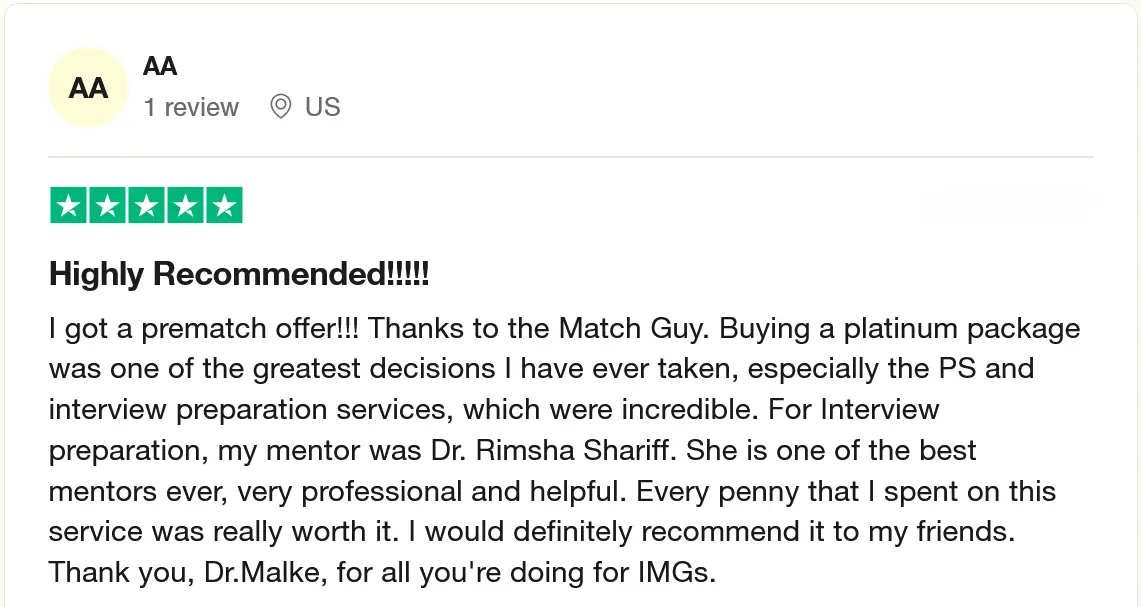
Do You Want to be Part of Our Match Success Stories?
What are the different Setting preferences?
Setting preference allows applicants to select the preferred setting of the program they want to train at. This feature helps to tailor the residency application process to align with the applicant’s interests and goals. Here are the different setting preference options available in ERAS:
Urban: Encompasses the central region of a city, characterized by high population and structural density with buildings, houses, railways, etc., non-agricultural in nature.
Suburban: These are smaller, less crowded urban pockets surrounding a city. Public transportation is limited, necessitating the use of private vehicles for commuting.
Rural: Characterized by vast, undeveloped land with low population density. The primary industries are often agriculture and natural resource extraction.
And you also have rural/suburban, suburban/urban, and no preference.
You will also get to write a short paragraph (up to 300 characters, including spaces) to explain your choice of a certain setting or why you do not have a preference. This answer will be shared with all programs.
Don’t risk your residency match chances with an average ERAS application. Allow our experts to enhance your accomplishments using our comprehensive ERAS CV editing services.

Program Signaling
Each applicant will also get the chance to signal a certain number of programs within each specialty. This will help demonstrate an interest in the program since each applicant has a very limited number of signals.
Applicants should use all their allocated program signals to indicate their interest in the programs they prefer most, including both home institution programs and those they did rotations/research at.
Programs that you signaled will be notified while programs you did not choose will not get the signal. That means programs will know that you did not signal them if they did not receive a signal from you.
The number of residency programs you can signal will vary based on the specialty. Click HERE for a list of the number of signals per specialty.
We highly recommend you use signals very wisely and realistically given their extreme value and the limited number of signals you have.
Looking for expert guidance to strategize your program signaling and boost your match opportunities?

Personal Information
Basic Information
Your personal information is critical to establish your name, contact address, and phone number. In addition, your email address will be the most important mode of correspondence during the Match season, so make sure to provide a valid and accessible one. Although less common, the same applies to your phone number. This information can be edited throughout the Match season.
Address
Add a mailing address to your ERAS CV, whether in the U.S. or outside. For correspondence via mail, many applicants residing outside the U.S. opt to provide the postal address of a U.S.-based friend or relative. There is an option to add a permanent address to your ERAS CV different from your mailing address.
Looking for a comprehensive ALL-IN-ONE Application Resource for MATCH® 2026, including ERAS application template, personal statement examples, MSPE samples, LOR examples, and much more?
Work Authorization
Describe your work authorization status in the US, be it a citizen, Green Card holder, etc. If not authorized, you can mention your preference for the J1 visa, H1B visa, or both. It also requires you to disclose whether you currently reside in the US.
Match Information
If you plan on participating in the NRMP Match, select your option in this section. Here you can also describe your interest in Couples Match and Urology Match.
Additional Information
Mention your USMLE/ECFMG ID, which is used to link your USMLE transcript to the ERAS application.
Biographic Information
Self-Identification
You may or may not choose to enter your ethnicity information into your ERAS CV. The inclusion of ethnicity on your ERAS (Electronic Residency Application Service) application can serve multiple purposes. Primarily, it allows residency programs to view the diversity of their applicants, which can be an important factor in their holistic review process. This information can help programs assess whether they are attracting a diverse pool of candidates, which can enrich the educational environment and better prepare residents for serving diverse populations. Additionally, for programs committed to promoting diversity in healthcare, this information might support efforts to address health disparities through education and community engagement.
Language Fluency
Now there is a question to check whether you meet the Advanced level for English language proficiency. You don’t need to add a proficiency level to other languages you add.
Military Information
Specify here if you are committed to fulfilling military or other service obligations.
Hometown(s)
You can select up to 3 hometowns you lived/ currently live in. You can mention your hometown to highlight your connections to a particular geographic area, potentially aligning with programs looking for candidates with local ties.
If you want a detailed guide on how to write a personal statement and things to include in this important document, check out our other blog here.
Education
Higher Education
This section describes your Undergraduate and Graduate college information. Most IMGs will select “None” as the path to medical school differs outside the US. In the case this applies to you, fill in the details like the institution, field of study, degree earned, etc. Master’s Degrees fall under this category.
Medical Education
Fill in the details of your medical school here. The details required are country, institution, degree earned, degree month, and year. The start and end dates of your medical school are also required here. Keep in mind that the date of your degree might differ from the dates of the beginning and end of your medical school (usually you get your degree a few months after you finish your medical school classes/final exam).
Postgraduate Training
This section was updated for the 2026 ERAS Cycle. Under Postgraduate Training is where you list your current and prior residencies, fellowships, and other postgraduate training experiences.
Previously, only training accredited by the ACGME, AOA, RCPSC, or UCNS could be listed here. Now, you may include any residency or fellowship training, even if it is not accredited by these organizations.
If your program is not accredited by ACGME, AOA, RCPSC, or UCNS, you are required to specify the accrediting body for that residency or fellowship.
Extensions and Interruptions
This section asks whether your medical training was interrupted or extended due to academic or professional reasons.
Beginning with the 2026 season, the section has been renamed to Academic/Professionalism: Interruptions or Extensions and split into two separate questions:
– One asks about academic interruptions/extensions.
– The other asks about professional interruptions/extensions.
As ERAS explicitly notes:
“This section is not intended to solicit information about your health, disability, or family status.”
If your interruption or extension was due to non-academic or non-professional reasons (e.g., personal, health, or family circumstances), you should consider answering “No” to both questions.
If you answer “Yes” to either question, be prepared to briefly and clearly explain the circumstances for each in the space provided.
Honors and Awards
In this section of the ERAS application, specify if you are a member of the Alpha Omega Alpha or Gold Humanism Honor Society. These prestigious national medical honor societies recognize excellence in the medical field and have chapters in many American medical schools, as well as a few international ones.
Following this, you should add any honors or awards you have received. Include the type of award, the name of the award, the date received, and a brief description of why you were honored, emphasizing the significance of each award.
Do you want our experienced team to edit your ERAS Application?

Memberships in Honorary/ Professional Societies
Mention your memberships in honorary/ professional societies in your field of interest.
Example:
American College of Physicians (ACP) (March 2022- Present)
American College of Cardiology (ACC) (April 2022- Present)
If you are looking for a comprehensive ALL-IN-ONE Application Resource for MATCH® 2026, including ERAS application template, personal statement examples, MSPE samples, LOR examples, and much more, click here.
Would You Like Us to Help You Match into Residency?
Licensure
State Medical Licenses
If applicable, this section requires adding your US state medical license number and expiration. However, most applicants do not hold a US state medical license at the time of residency application, so you may skip this question.
Additional questions
You must answer questions regarding misdemeanors, malpractice, suspension of licensure, and criminal history. Mention if you are Board certified in any specialty here.
Other Certifications
You can add here any other medical certifications you have including BLS, ACLS, and PALS certificates.
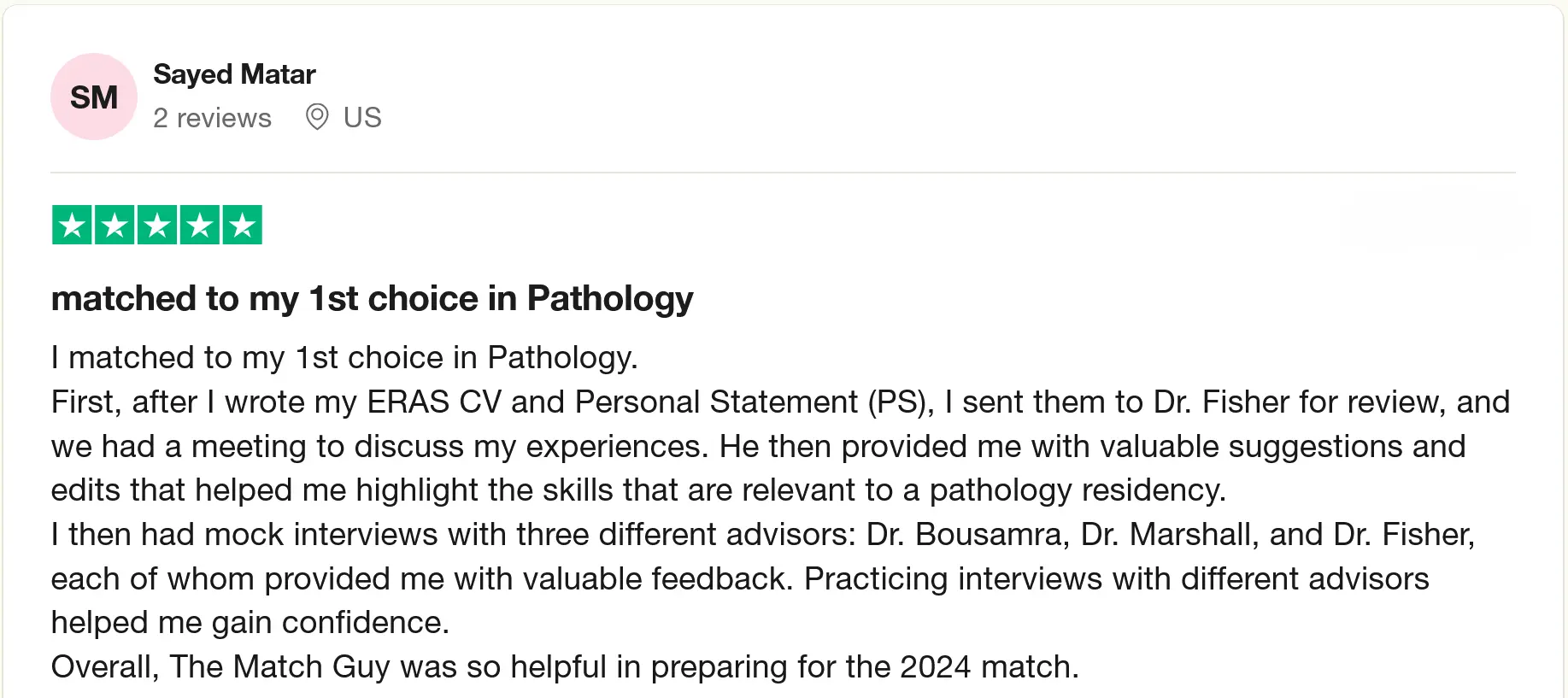
Would You Like Us to Help You Match Into Residency?
Publications
The publication section is of great value in portraying your research output. Additionally, university/ competitive programs seek applicants with a strong foundation in research.
Peer-Reviewed Journal Articles/ Abstracts
This refers to already published articles/abstracts that have a volume, issue number, and pages. You need to add the title of the article, authors (in the order of Last name, First initial. Middle initial.,), publication name (which refers to the journal), and publication details.
Conference abstracts, if published in a peer-reviewed journal, can be added here.
Transform research ideas into published papers! Our beginner research course for medical students guides you through the process, empowering you to become a published author.

Peer-Reviewed Journal Articles/ Abstracts (Other than Published)
Submitted: These are academic papers that have been submitted to a journal for consideration but have not yet undergone the peer-review process.
Under Review: Once a paper has been submitted and passes a basic editorial check, it moves into the peer-review stage, at this point it’s often referred to as being “under review”.
Accepted/ In-press: These are articles that have gone through the peer-review process and have been accepted for publication by a journal. They may not have been copy-edited or formatted in the journal’s style yet, but they are considered to have been formally accepted. In-Press Articles have been accepted for publication and usually have been edited and formatted to the publication’s style. They’re in the queue to be published, but the journal issue they will appear in hasn’t been finalized yet.
Preprints: These are versions of a paper that precede formal peer review and publication in a peer-reviewed journal. They are often posted on preprint servers to share findings with the scientific community quickly, gather feedback, and establish a record of priority or precedence. They are not peer-reviewed, but they are citable, and they often undergo further revision before being submitted for peer review for formal publication.
If you are looking for a comprehensive ALL-IN-ONE Application Resource for MATCH® 2026, including ERAS application template, personal statement examples, MSPE samples, LOR examples, and much more, click here.
Need Expert Help to Ace Your ERAS Application?
Oral and Poster Presentations
Oral and poster presentations include research work presented at scientific meetings and conferences. They do not include medical school presentations and didactic presentations. Note that you can enter the details of an upcoming presentation, which indicates acceptance of the abstract in a future conference. Do not include submitted but non-accepted abstract presentations.
Specialty Questions
- Applicants to Anesthesiology, Neurological Surgery, and Plastic Surgery-Integrated will now be required to answer specialty-specific questions before applying to programs in these specialties.
- If you save programs in one of these specialties, you’ll be reminded to complete the required questions before submitting applications.
- Responses are only visible to programs in the corresponding specialty.
- These questions must also be answered during the 2026 SOAP if applicable.
- The specialty specific questions are listed below. For sample answers to these questions, check out our ERAS Application Template here.
- Anesthesiology
○ “Describe a time when you faced adversity, how you overcame it, and any lessons learned from it.”
○ “Describe a situation in which you would have made a different decision that might have led to a better outcome.”
○ “Describe your ideal career as an attending.” - Neurological Surgery
○ “Describe a time when you had to make a quick decision. What did you consider when making the decision? Who did you consult or not and why?”
○ “Describe a specific situation where you received negative feedback about your performance. How did you adjust your behavior? What did you learn from this situation?”
○ “Describe a specific situation when your workload was overwhelming. What specific actions did you take to manage your workload? What was the outcome?” - Plastic Surgery – Integrated
○ “Describe a specific situation when a team you were on had to collaborate to achieve an outcome and there was a disagreement. How did you specifically contribute to the solution?”
○ “Describe a specific situation where you experienced a setback. How did you overcome this challenge?”
○ “Describe a time when you had to make an important decision quickly. What did you consider when making the decision?”
Find the U.S. Research Position of your dreams!Get all the tips, tricks and secrets to increase your chances of landing the research position you’re looking for.

Certify and Submit
Make sure the details are filled out without spelling or grammatical errors. Once certified, the ERAS CV cannot be edited except for personal information. Hence, get your ERAS CV structurally and grammatically edited by a professional advisor with good proficiency or a professional. Then, view/print your CV to have a look at the outlook of your CV before certifying and submitting it.
Would You Like Us to Help You Match into Residency?
We hope this blog helps you build an outstanding ERAS CV!
If you need help with editing your ERAS application or having an expert lay an eye on it and give you comprehensive feedback, don’t hesitate to reach out to us HERE!
You can also bundle your personal statement editing with ERAS application editing and interview preparation by signing up to our Match Application Packages HERE.
If you have any questions about any of our services, don’t hesitate to reach out to our customer support service here.
If you are looking for a comprehensive ALL-IN-ONE Application Resource for MATCH® 2026, including ERAS application template, personal statement examples, MSPE samples, LOR examples, and much more, click here.
Good luck with your application and always remember, The Match Guy is here for you!
To your Match,
The Match Guy
Latest Articles

2026 Residency Personal Statement The Ultimate Guide to Crafting Your Residency Personal Statement
Malke Asaad
July 8, 2024

Best Resources for USMLE STEP 1! How to Study and Prepare for STEP1?
Malke Asaad
August 12, 2022
ERAS Application 2026 Guide! How to Fill Out ERAS Residency Application?
Malke Asaad
July 13, 2023
Need Help?
About TheMatchGuy
TheMatchGuy is a premier medical consulting firm trusted by over 35,000 students and doctors worldwide. Known for our track record and specialization in helping MATCH® Applicants secure residency spots at programs in the United States 🇺🇸 and exceptional guidance in Research, USMLE prep, and clinical experience services. Learn more about how they can help you achieve your career goals. Schedule a discovery call for FREE now.
RECOMMENDED BLOGS
2026 Residency Personal Statement

Personal Statement Samples Blog

Letters of Recommendation for ERAS and Residency Applicants