

Residency Interviews Blog


If you want my team to help you with your Interview Preparation, click here.
The medical residency interview is a critical juncture in a medical student’s journey, especially as match day approaches. It’s not just a formality; it’s an opportunity. In many ways, it can be the determining factor in whether or not an applicant secures a position in their desired residency program. And as with any pivotal moment, the first impression matters a great deal.
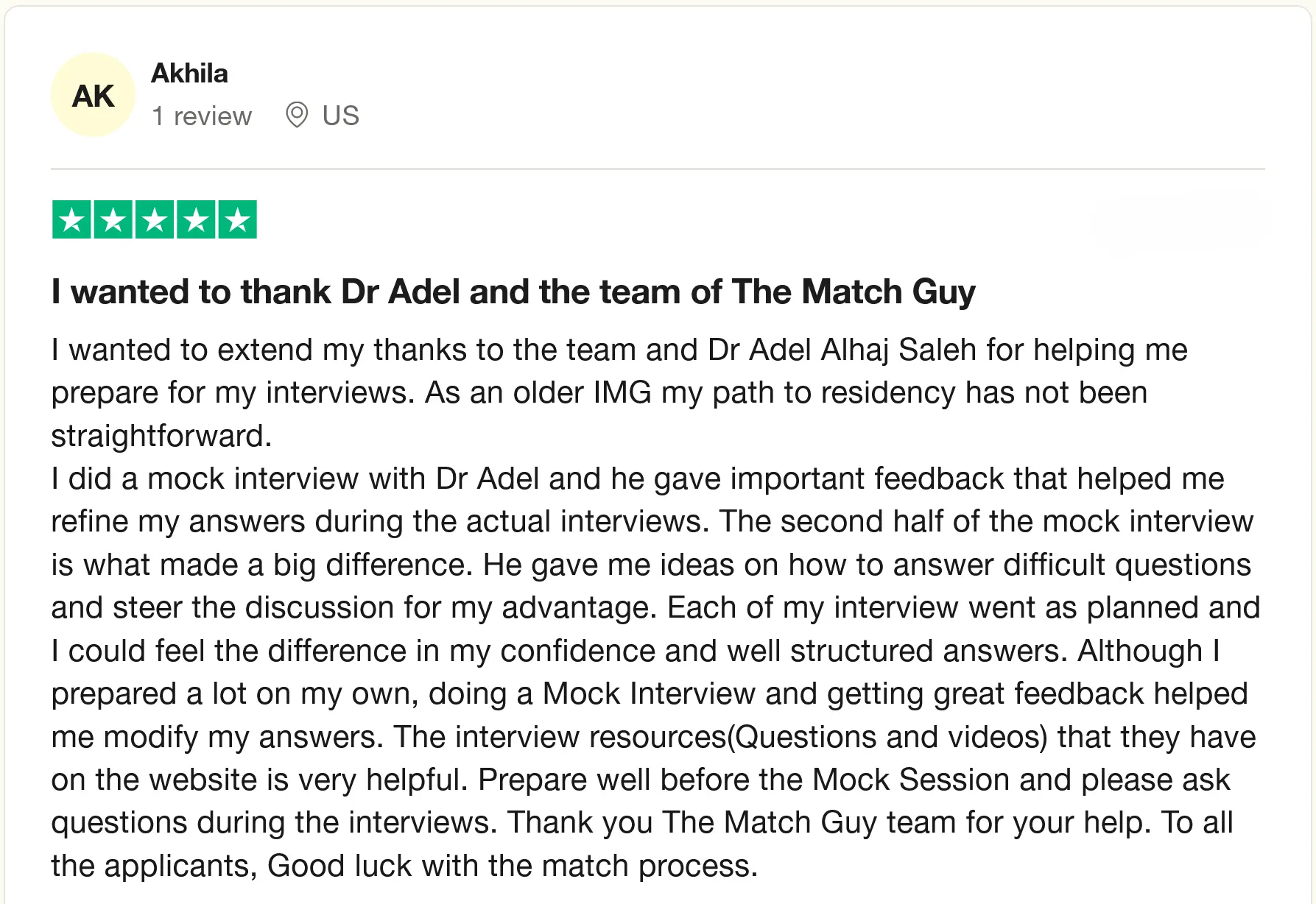
If you need any coaching or guidance with your interview preparation, make sure to check out our interview coaching package here, in which we do one-on-one mock interviews and provide feedback.

While your academic achievements, extracurricular activities, letters of recommendation, and personal statement play significant roles in getting you to the interview stage, the interview itself is where program directors get a chance to see you as a person beyond the paperwork. They want to assess your interpersonal skills, your fit for the program, and most importantly, your passion and commitment to the field. Remember, they’re not just selecting a student; they’re choosing a future colleague.
Among the array of questions you might face, “tell me about yourself” often pops up right at the beginning. It’s deceptively simple. While it might seem like a casual ice-breaker, it’s actually a gateway for interviewers to delve deeper into your journey, motivations, and aspirations. Your answer can set the tone for the rest of the interview, offering a narrative that can be referred back to, or expanded upon, with subsequent questions.
In essence, this seemingly straightforward question is an invitation. It’s an opportunity for you to guide the interview in a direction you’re comfortable with, highlighting your strengths, experiences, and vision for the future. But, like any open-ended question, it also poses challenges. Striking the right balance between being concise yet comprehensive, personal yet professional, and modest yet confident can be tricky.
As we delve deeper into this guide, our aim is to help you navigate this balance, ensuring that your response to “tell me about yourself” not only resonates with your personal journey but also aligns seamlessly with the values and expectations of the residency programs you’re eyeing.
At first glance, “tell me about yourself” appears to be an open-ended, informal prompt. It might evoke memories of social settings, first dates, or casual conversations. However, within the confines of a medical residency interview, this question is laden with layers and expectations. It’s essential to decode its true intent and craft a response that hits the right notes, proving you are driven by passion rather than just asking “how much does an MD make?”.
Many interviewees make the mistake of treating this question as casual banter. While it might seem like a relaxed way to start the conversation, interviewers are often using it as a litmus test to gauge multiple aspects of your candidacy. They’re listening for clues about your background, your motivations for choosing medicine (beyond just the future medical doctor salary), the experiences that have shaped your journey, and the vision you hold for your future in the field.
While “tell me about yourself” invites you to share your story, it’s important to remember that this isn’t an invitation to recount your life history. The emphasis should be on your professional journey. That’s not to say you can’t get personal – indeed, personal experiences can illuminate why you’re passionate about medicine. However, these anecdotes should be chosen carefully and always linked back to your professional aspirations and growth, showing you understand the commitment regardless of how long your residency is in your chosen field.
In essence, when an interviewer poses this question, they’re essentially asking: “Who are you as a budding medical professional? How did you get here, and where do you envision yourself going? Why should we consider you as a valuable addition to our program and the broader medical community?”
Given the limited time in an interview, every word you utter counts. Thus, when answering this question, always ask yourself: Is this detail relevant to my medical journey? Does it underscore my qualifications, passion, or fit for the program? Filtering your response through the lens of relevance ensures that you provide a concise yet impactful overview that resonates with the interviewer.
In a nutshell, “tell me about yourself” is more than a mere icebreaker. It’s a strategic prompt, allowing interviewers to gain insights into your character, dedication, and potential fit for the program. By understanding the depth and nuances of this question, you can craft a response that not only answers the query but also sets a positive, compelling tone for the rest of the interview.
If you are looking for comprehensive Residency Interview Preparation Resources📦 for Match 2026/2027, including 250+ residency interview questions, samples to perfect answers for medical residency interview preparation and much more, click here.
One of the best ways to approach the “tell me about yourself” question is by framing your response with a clear and logical structure. Doing so ensures that you touch on key aspects of your journey without getting sidetracked. While there are multiple ways to approach this, the “Past, Present, Future” framework provides a straightforward yet comprehensive blueprint.
Current Role & Achievements: If you’re wrapping up medical school, mention any ongoing projects, roles, or responsibilities. If you’re currently working or in a transitional phase, speak about your current role and the skills or experiences you’re gaining.
Reason for Residency: Discuss why you’re seeking a residency at this juncture. What are you looking to learn and achieve? How do you feel this is the next logical step in your journey?
If you are looking for a comprehensive ALL-IN-ONE Application Resource for MATCH® 2026/2027, including ERAS application template, personal statement examples, MSPE samples, LOR examples, and much more, click here.
Vision for Your Career: This is your chance to showcase ambition. Are you aiming for a particular subspecialty? Do you envision a career that balances clinical work with research or teaching?
Fit with the Program: Conclude by tying your future goals to the strengths of the residency program you’re interviewing with. How will this specific program provide the experiences, mentorship, and resources you need to achieve your vision?
Concise Narration: While the “Past, Present, Future” structure provides a roadmap, it’s crucial to be concise. Aim to spend no more than 1.5-2 minutes on your response to ensure you maintain the interviewer’s interest.
Transitions: Use smooth transitions between each section to ensure your response flows naturally. Phrases like “Fast forward to today…” or “Looking ahead…” can be useful.
Customization: Always tweak your response based on the program you’re interviewing with. Emphasize experiences or goals that align closely with the program’s strengths or focus
Crafting a response using the “Past, Present, Future” framework offers interviewers a holistic view of your journey, showcasing not just where you’ve been, but also where you aim to go. By rooting your answer in this structure, you ensure clarity, relevance, and resonance, positioning yourself as a thoughtful and well-prepared candidate.
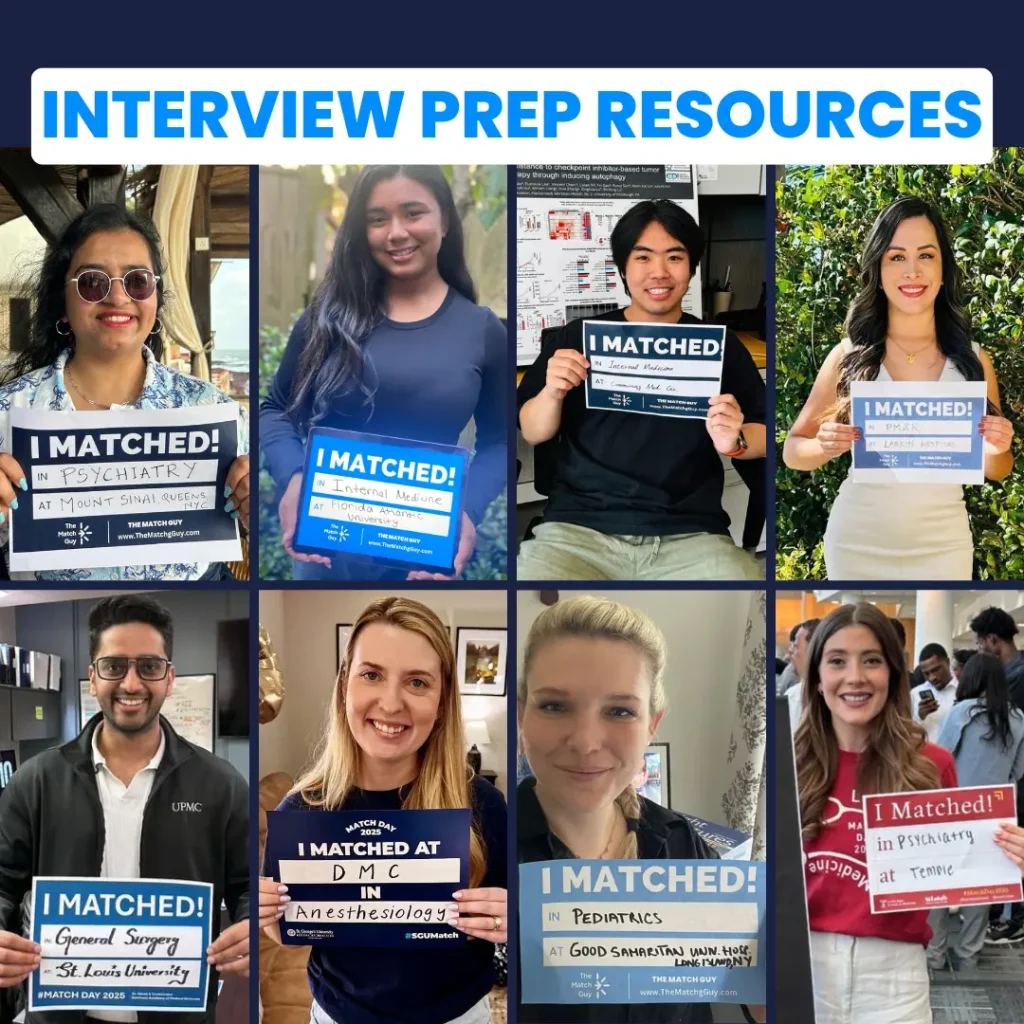
Get access to 250+ residency interview questions, samples of perfect answers for medical residency interview preparation and other resources!
Crafting a compelling answer to the “tell me about yourself” question is both an art and a science. While the structure provides the blueprint, how you fill in those sections and present them can make a world of difference. Here are some tried-and-tested tips to help you refine and polish your response.
Interviewers meet countless candidates, and they can quickly sense rehearsed or disingenuous responses. Speak from the heart, sharing genuine experiences and feelings. It’s okay to show vulnerability if it’s tied to personal growth or realization.
While your medical skills are paramount, residency programs also value soft skills. Highlight experiences where you demonstrated teamwork, leadership, communication, or problem-solving capabilities, especially if they can be tied to medical settings.
You might have a plethora of experiences, but that doesn’t mean you should detail them all. Prioritize events or accomplishments that had the most profound impact on your journey or those most relevant to the residency program.
While it’s important to practice your answer to ensure clarity and confidence, over-rehearsing can make you sound robotic. Aim for a natural flow, as if you’re having a meaningful conversation rather than reciting a memorized script.
Share your response with mentors, peers, or even family members. They can offer valuable feedback on clarity, impact, and any missing elements you might have overlooked.
Medicine is a dynamic field. Stay informed about any recent advancements or changes in your chosen specialty. This ensures that your aspirations and discussions reflect a current and informed perspective.
Maintain good posture, eye contact, and avoid fidgeting. Your body language should complement and reinforce the enthusiasm and commitment you’re conveying verbally.
Research is Key. Invest time in researching each program you’re interviewing with. Highlight aspects of your journey that align with their mission, values, or unique offerings. This not only shows your serious interest but also establishes a clear fit.
Looking for a comprehensive Residency Interview resources with 250+ questions and samples of perfect answers for medical residency?
Grab your FREE Interview Prep Resources here!

Our editing includes not only language but also context, structure, and content advising.

The editing goes beyond language and grammar corrections to structure, design, and content based on your personal story and achievement.

The best way to learn something is to do it. That’s why we divide our interview preparation sessions into two parts.
Mock Interview + Feedback

We are able to provide you with the guidance you need at any step of your journey to make it to your final goal!
Navigating the “tell me about yourself” question with finesse requires not only knowing what to include but also understanding potential pitfalls. Awareness of these common mistakes can help you sidestep them, ensuring your answer shines in the best light.
While personal anecdotes can provide context, spending too much time discussing childhood, family, or unrelated personal history can divert attention from your professional journey. Always circle back to how personal experiences shaped your medical aspirations.
While it’s crucial to remain humble, it’s equally important to recognize and articulate your accomplishments. Strive for a balanced narrative that acknowledges your achievements without appearing boastful.
While academic achievements are significant, they don’t paint the full picture. Overly focusing on grades or test scores can make you come off as one-dimensional. Ensure your answer touches on experiences, learnings, and personal growth.
Given that interviews are time-constrained, taking too long to answer can eat into valuable discussion time for other topics. Aim for a response that is comprehensive yet concise, typically lasting 1.5-2 minutes
Assuming you can wing the response can lead to a disjointed and ineffective answer. Dedicate time to crafting, refining, and practicing your narrative.
While discussing past achievements and experiences is essential, neglecting to mention current endeavors or future aspirations can make your answer seem one-dimensional. Use the “Past, Present, Future” structure as a guide.
Awareness of these common missteps, combined with thoughtful preparation, can ensure that your answer is both compelling and free from potential pitfalls. By steering clear of these mistakes, you position yourself as a well-prepared, reflective, and self-aware candidate, ready to make a meaningful contribution to the medical community.
Here is a sample answer for how you should introduce yourself during a residency interview:
Hello! I am originally from Indonesia, where my family has been farming for generations. While I did spend many days in the fields and was intrigued by agriculture, I was always more passionate about academics, especially science and technology. My parents recognized this passion early on and, despite our humble beginnings, they went to great lengths to support my dream, even taking out loans so I could attend medical school at University Hospital. By my fourth year there, I was certain that Internal Medicine was the path for me. I started internal medicine residency in Indonesia and right after I finished my residency, life took an interesting turn when my husband was offered a position with Amazon, and we found ourselves relocating to the US. To familiarize myself with the healthcare system here, I began working as a medical scribe and assistant at Jacob’s Hospital in Michigan. Additionally, I’ve had the opportunity to gain clinical experience in various specialties across the country, from cardiology and infectious disease to GI and endocrinology in the form of US Clinical Experiences.
Outside of the medical world, I’m quite an avid golfer. And when I’m not on the golf course, you’ll likely find me spending quality time with my husband and our adorable Corgi, Kokomo.
It’s been quite the journey so far, and I’m excited about what the future holds!
Looking for a comprehensive ERAS Application Template with examples of diverse experiences and publication types?
Grab your FREE ERAS Template right here!

International medical graduates (IMGs) bring unique perspectives and experiences to the table. However, they often face distinctive challenges during the residency application and interview process in the U.S. Understanding these challenges and effectively addressing them can significantly enhance their chances.
Your international background offers a rich tapestry of experiences that can contribute to a diverse learning environment. Emphasize any unique medical practices, perspectives, or patient interactions you’ve encountered in your home country that can add value to the program.
If English is not your first language, it might be a concern for some programs regarding patient communication. Highlight any additional training, certifications, or experiences you’ve had to showcase your proficiency and comfort in communicating effectively in English.
Familiarize yourself with the nuances of the U.S. healthcare system. Discuss rotations, observerships, or clerkships you’ve completed in the U.S. to show that you’re not only familiar with but can also effectively navigate the system.
Get access to 250+ residency interview questions, samples of perfect answers for medical residency interview preparation and other resources!
Claim your FREE Interview Preparation Resources here!

Connecting with IMGs who have successfully matched into U.S. residency programs can provide invaluable insights, guidance, and encouragement. They can share their experiences, challenges they faced, and how they overcame them.
Visa regulations can be complex and may change over time. Ensure you’re up-to-date with the latest requirements, and be prepared to discuss potential sponsorship or visa-related questions during interviews.
Given potential biases or misconceptions about IMGs, it’s essential to highlight soft skills such as adaptability, resilience, and cross-cultural communication. Share anecdotes or experiences where you’ve demonstrated these skills, especially in diverse or challenging environments.
While the path for international applicants may have additional hurdles, the unique experiences and perspectives IMGs bring are invaluable. By proactively addressing potential concerns, showcasing the strengths of an international background, and demonstrating a commitment to contributing to U.S. healthcare, IMGs can position themselves as strong contenders for residency programs.
If you are applying to the Match and need a detailed guide on how to ace your ERAS application, check out our free ERAS Application Guide here.
Navigating the “tell me about yourself” question in a medical residency interview can be a defining moment for applicants. The key lies in crafting a response that is authentic, structured, and reflective of both personal and professional narratives. By avoiding common pitfalls, highlighting your unique qualifications, and tailoring your answer to each program’s mission and values, you can set a strong and memorable tone for the rest of the interview. Remember that this is more than just a question—it’s an opportunity to convey your passion for medicine, your dedication to patient care, and your readiness to embark on the challenging and rewarding path of a medical residency. For both domestic and international applicants, a well-prepared introduction is the first step toward securing a residency where you can thrive and contribute meaningfully to the field of healthcare.
For those gearing up for their first interview, don’t miss our interview preparation packages! There are different tiers of interview preparation that include real-time mock interview and feedback about your performance! 100% satisfaction guaranteed! All by expert physician advisors! Learn more Here!
And don’t forget to grab your Free Residency Interview Questions and Answers Guide Here.
Good Luck with your residency interview and don’t hesitate to reach out to us for any questions.
James Fisher, MD; Malke Asaad, MD