




USMLE Blog
USMLE STEP 3 CCS Cases
How to Tackle the Computer-Based Case Simulations

I hope you enjoy reading this blog post.
If you want our team’s expert help with your USMLE prep, click here
Computer-based case simulations (CCS) on USMLE Step 3 can be one of the most challenging parts of the exam. Instead of just picking an answer choice, you’re suddenly responsible for managing a virtual patient in real time: choosing orders, advancing the clock, and deciding when to admit, transfer, or discharge.
In this blog, we’ll walk through what CCS cases are, how timing works, how to navigate the Primum software, and a practical, high-yield framework you can apply to any case. We’ll also highlight common emergency orders, diagnostic tests, symptom management strategies, and the best resources to use as you prepare for Step 3 CCS.
Whether you’re early in your Step 3 studying or just trying to polish your approach in the final days before your exam, this guide is designed to make CCS cases more predictable, systematic, and manageable.
The Step 3 CCS Course is your complete guide to mastering the CCS portion of USMLE Step 3, built around high-yield strategies and clear explanations that help you succeed with confidence.
You don’t have to tackle Step 3 alone. Our full course provides clear explanations and high-yield notes designed to boost your confidence. Enroll today.
If you need a personalized strategy or one-on-one expert guidance to push past your plateau, we’ve got you covered. Explore Our Expert USMLE Tutoring to get paired with a top-scoring physician and achieve your target score efficiently.
Table of Contents
- What are the STEP 3 CCS cases?
- How does timing work for the cases?
- How do I navigate the Primum interface?
- How do I approach a case?
- What does a high-yield approach to a CCS case look like?
- How important are CCS cases for my overall STEP 3 score?
- What are the best resources specifically for STEP 3 CCS?
- Frequently Asked Questions (FAQs)
- Final advice
What are the USMLE STEP 3 CCS cases?
On Day 2 of STEP 3, after six MCQ blocks, you’ll work through 13 CCS cases. For each case, you are first given a “one-liner” followed by vitals and a full history. Next, you will use NBME’s Primum software to:
- Perform physical exams and collect interval history
- Order labs, imaging, procedures, and consults
- Start treatments (medications, fluids, oxygen, etc.)
- Admit, discharge, or transfer the patient
- Provide counseling and preventive care
As you progress through each case, the patient’s condition will change based on the disease process and your management decisions.
How does timing work for the USMLE Step 3 CCS cases?
CCS cases will either be 10 minutes or 20 minutes.
- For 10-minute cases, you have 8 minutes to solve the case and 2 minutes to place the last orders.
- For 20-minute cases, you have 18 minutes to solve the case and 2 minutes to place the last orders.
This is the “real time” you have to complete each case. There is also the concept of “simulated time,” which is the amount of time the patient has been in your care. Performing the physical exam and obtaining tests will cause simulated time to advance. This is important to be aware of, as you do not want to delay any urgent interventions, if needed.
Check out this video to learn how to pass Step 3 in just 3 weeks.
How do I navigate the Primum interface for USMLE Step 3 CCS?
There are four tabs in the Primum software that you can toggle between to manage each patient’s care:

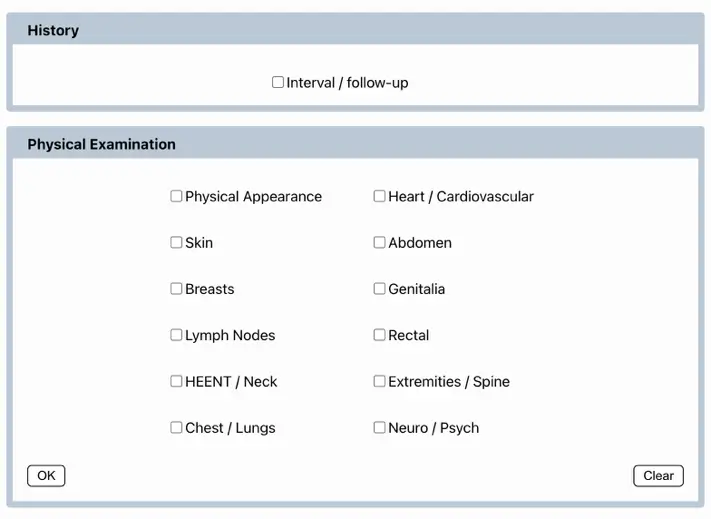
- Interval history or physical exam – this is where you can request a complete or focused physical exam and see how your patient is doing following an intervention.
- Write orders or review chart – this is where you will place orders including emergency orders, lab tests, imaging, medications, procedures, consults, and counseling.
- Obtain results or see patient later – this will allow you to advance “simulated time” to see the results of tests or interventions.
- Change location– this is where you would go to transfer the patient to a different environment (e.g. inpatient unit, ICU, office).
If you are unfamiliar with the Primum interface, you can watch the official USMLE tutorial or see a walkthrough of an example case here.
How do I approach a USMLE Step 3 CCS case?
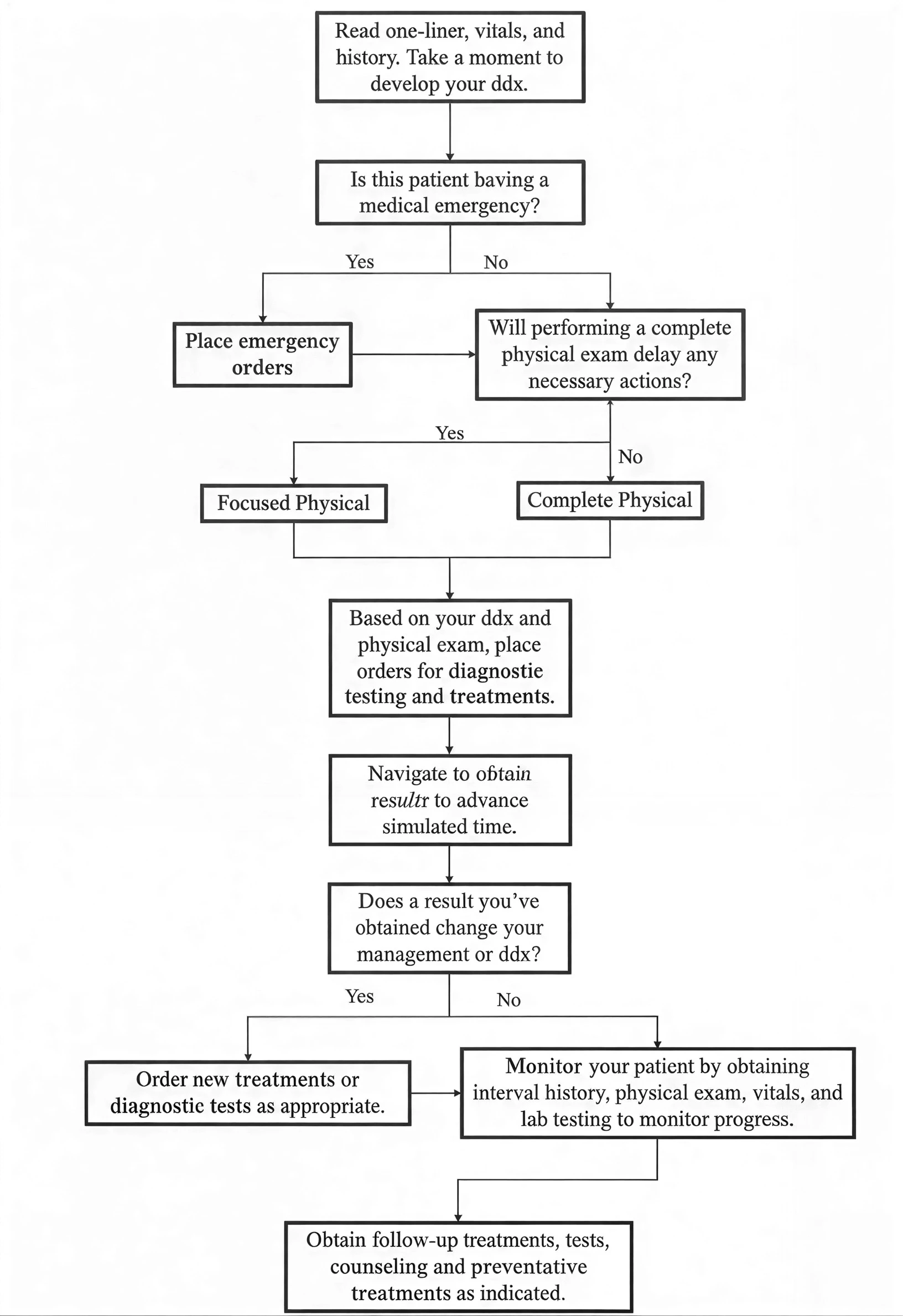
After reading the one-liner, vitals, and history, you should take a moment to think about your differential diagnosis. After you have your differential, you must decide if this patient is having a medical emergency.
If the patient is having an emergency, you should go directly to the orders tab to input emergency orders.
What are common examples of emergency orders in USMLE Step 3 CCS?
- Pulse oximetry
- Cardiac monitor
- Blood pressure monitor
- IV access
- IV fluids
- Oxygen
- ECG
If you decide that the patient does not need any emergency orders, you can go directly to the physical exam tab. In this tab, you must decide if you want a complete or focused physical exam.
If the case is NOT urgent or emergent (for example, in most office visits), you should obtain a complete exam (checking all systems unless completely unrelated to the chief complaint). For urgent or emergent cases, you should obtain a focused physical exam on the pertinent systems for your differential diagnosis (after placing any emergency orders) to ensure you do not delay any urgent intervention. For emergent cases, you can always obtain a complete exam later in the case once the patient has been stabilized.
Next, you toggle back to the orders tab to input any diagnostic tests that will help confirm your suspected diagnosis. Common diagnostic tests include:
- Blood tests
○ CBC
○ BMP
○ LFT
○ TSH
○ ESR
○ CRP
○ ABG
○ PT/INR - Cardiology studies
○ 12-lead ECG
○ Echocardiogram - Urine and stool studies
○ Urinalysis
○ Urine toxicology screen
○ FOBT - Infectious workup
○ Blood cultures
○ Sputum Analysis
○ CSF analysis - Imaging studies
○ X-ray
○ CT
○ Ultrasound
○ MRI
At this time, you should also input any treatments or procedures that are needed. Make sure you do not delay treatment for further testing in emergency situations (for example, obtaining chest imaging in a patient with a tension pneumothorax diagnosed by exam). Also ensure that you do not perform any unnecessary invasive testing that may harm the patient.
Master the CCS part of the STEP 3 Exam with our online self-paced course, available now for only $49!
Common treatments for symptom management in Step 3 CCS include:
- Analgesics
○ Tylenol
○ NSAIDS
○ Morphine
○ Hydromorphone
○ Oxycodone - Nausea
○ Zofran
○ Phenergan - Diarrhea
○ Loperamide - Cramping
○ Dicyclomine
You can input the orders all at once and confirm them one-by-one to save time.
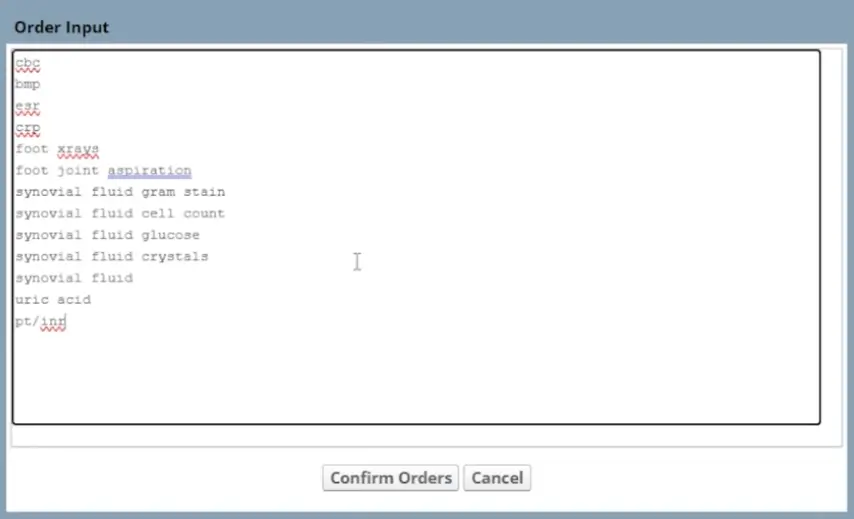
After placing your orders, you can toggle to the obtain results tab to see the results of any testing or treatments performed. Note that this will cause “simulated time” to advance.
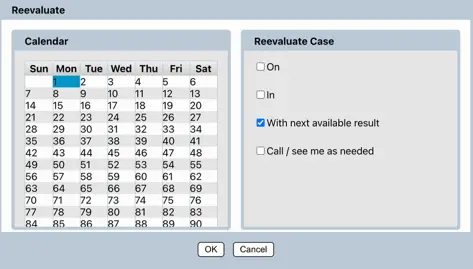
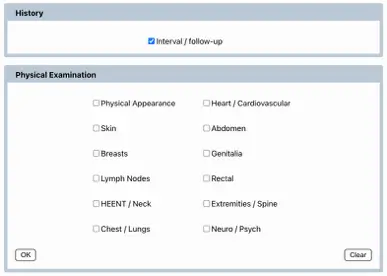
Once a treatment has been performed, you can also toggle back to the physical exam tab to obtain interval history and repeat exam. Failing to re-evaluate your patient during the simulation may cause you to lose points.
Common ways of monitoring your patient through the case include:
- Interval history & physical exam
- Vital signs
- CBC
- BMP
If you receive a result that changes your management, you can stop advancing time and enter orders for necessary treatments and testing.
At this point, you will often have a diagnosis and should focus on next steps in management. Input any follow-up testing, treatments, or consults you would like to perform. If the patient needs to be transferred (for example, admitted to the inpatient floor or ICU), you can also do this at this time.
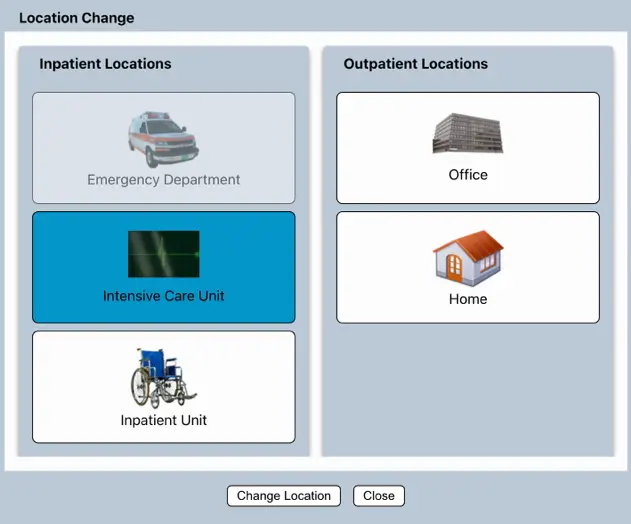
For example, if you decide your patient needs to go to surgery, you can stop advancing the clock to enter orders such as:
- Surgery consult
- IV access
- IV fluids
- PT/PTT
- ECG
- Antibiotics (such as cefazolin)
- Type and cross match
- Type of surgery
In the last 2 minutes of the case, you should place any follow up orders needed to continue monitoring the patient’s condition. This is also when you may order counseling and preventative health orders.
Ace Your Step 3 with Expert Guidance
Struggling with Step 3 preparation? Get personalized 1-on-1 coaching from top scorers and experienced mentors.
Common counseling and preventative health orders include:
- Patient counseling
○ Disease process
○ Medication side effects
○ Advanced directive
○ No driving
○ Smoking, alcohol or substance use cessation
○ And many more - Preventative health
○ Vaccines
○ Disease screening
You cannot obtain any new results or reevaluate the patient during this period. You may reach this point of the case before the patient has completely improved. This is OK! Take this opportunity to complete any diagnostic tests, treatments, consults or counseling you feel you may have missed during the “solving” portion of the case.
Want to see exactly how the CCS interface works? We have a full tutorial that walks through the platform step-by-step and includes a complete sample case. Watch it below.
What does a high-yield approach to a USMLE Step 3 CCS case look like?
Although every case is different, your framework should be the same:
1. First 1–2 “real-time” minutes: don’t miss emergencies
Think: Airway – Breathing – Circulation – Disability – Exposure
Depending on the presentation, consider:
- Vitals & monitoring: blood pressure monitoring, pulse ox, continuous cardiac monitoring
- Immediate orders when appropriate:
○ Oxygen
○ IV access, fluids
○ EKG
○ Finger-stick glucose - If unstable:
○ Transfer to ICU or keep in ED
○ Resuscitate before fancy tests
2. Initial workup: history, physical, targeted tests
- Order appropriate physical exam
- Start high-yield initial labs/imaging based on the presenting symptom:
○ Chest pain → EKG, troponin, CXR, D-dimer or CT-PA if PE suspected
○ Abdominal pain → CBC, BMP, LFTs, lipase, pregnancy test in reproductive-age females, UA, ultrasound/CT
3. Management and follow-up: advance simulated time wisely
- Advance the clock to get results; re-check vitals and exam to reassess
- Adjust treatment based on new information. Examples:
○ Start antibiotics when infection is likely.
○ Arrange emergent catheterization for STEMI.
○ Give insulin/fluids for DKA and monitor BMP, glucose, anion gap. - Don’t forget:
○ Pain control and anti-emetics
○ NPO status before procedures
○ Pregnancy status in women of childbearing age
○ DVT prophylaxis (if inpatient and appropriate)
4. Disposition & preventive care
- Decide when to admit, transfer, or discharge based on stability and diagnosis.
- Provide counseling and preventive care when applicable (vaccines, smoking cessation, contraception, safety counseling).
You’re graded on overall management quality, not how many obscure tests you order. Safe, guideline-consistent care will lead to success on the CCS cases.
For an overview of CCS case approaches and an example walk-through of a real CCS case, see our video on The Ultimate Step3 CCS Guide.
How important are CCS cases for my overall USMLE STEP 3 score?
Although the USMLE does not clearly state how much the CCS cases contribute to your overall score, the general consensus is that this section accounts for 25-30% of your STEP 3 score. The system awards points for indicated actions and penalizes incorrect or delayed actions.
Familiarizing yourself with the Primum software is essential in feeling confident during this section on test day. Practice the appropriate sequence of steps and the high-yield approach outlined above.
With repetition, you will develop “muscle memory” when working through these cases which can help you focus on the medical management of your simulated patient during the exam.
What are the best resources specifically for USMLE STEP 3 CCS?
1. UWorld STEP 3 CCS cases
- Interactive cases that mimic the exam interface.
- Practice entering orders, advancing time, and managing different settings (ED, inpatient, outpatient). UWorld provides 51 interactive cases with the Primum software and 41 “read-only” cases for additional review.
2. The Match Guy STEP 3 CCS Course
- Walk-throughs of real cases on the actual CCS-style platform, showing exactly how to:
○ Enter orders
○ Advance the clock
○ Decide when to admit/transfer/discharge - About a few hours total – efficient way to understand the software mechanics and “flow” before grinding through cases.
- Learn more here.
3. CCScases.com
- Large bank of CCS-style cases with written feedback and a (non-validated) scoring system.
- Good for volume and variety, but don’t over-interpret their “scores.”
4. USMLE official CCS software + free practice cases
- Downloadable from the USMLE website (Primum software).
- Includes several practice CCS cases with written feedback but no numerical score.
5. If you prefer personalized guidance, we also offer 1-on-1 STEP 3 tutoring (including CCS) with a free introductory session and a 100% money-back guarantee.
Frequently Asked Questions (FAQs) about STEP 3 CCS
1. What are USMLE Step 3 CCS cases really testing?
CCS cases are essentially asking: “Can you manage a real patient safely and logically over time?” Instead of picking one best answer, you’re graded on a sequence of decisions—recognizing emergencies, choosing appropriate tests and treatments, monitoring the patient, and planning follow-up. If you think of it as practicing real clinical reasoning in a simulated environment, the cases feel much less mysterious.
2. How should I think about emergency orders and the very start of a case?
Ask yourself: “Do I need emergency orders before I even touch the physical exam?” If the patient looks unstable (trauma, shock, severe dyspnea, chest pain, etc.), you stabilize first and put in a small core set of monitoring + access + support orders, then move on. If the patient is clearly stable, you can skip straight to the exam and save time.
3. How do I decide what kind of physical exam to order in Step 3 CCS?
Follow these two simple rules from the walkthrough:
- Stable / most outpatient encounters → full exam so you don’t miss anything.
- Acute distress / obvious emergency → focused exam on the problem first, then a full exam later once the patient is safer.
Trauma is the one big exception where a full exam up front is often appropriate, because missing an injury is dangerous.
4. What’s a practical way to remember labs, imaging, and symptom control without overthinking it in Step 3 CCS?
Think in “bundles,” not giant menus. Have a core lab bundle in mind (basic bloodwork + anything obviously relevant), then add targeted tests depending on the organ system you’re worried about (cardiac, abdominal, neuro, etc.). For imaging, decide: Do I need X-ray, CT, ultrasound, or MRI to answer my main question? For symptom control, treat pain, nausea, and other symptoms early—don’t let a patient “suffer” through the case.
5. How should I use monitoring, interval follow-up, and the last 2 minute screen to my advantage?
Monitoring is where a lot of hidden points live. Every few simulated hours in a serious case, repeat vitals, get a brief interval history/physical on the relevant systems, and re-check key labs when appropriate (for example, hemoglobin in trauma, BMP in DKA). On the final screen—when you can’t advance time—pretend you’re handing the patient off: make sure monitoring, follow-up labs, preventive care, and counseling are all ordered going forward. You won’t see results, but the exam still gives you credit for thinking ahead.
Crush the Biostatistics of USMLE STEP 1, STEP 2 CK, and STEP 3 exams

Final advice for USMLE STEP 3 CCS
In assessing if you are ready for the Step 3 CCS section, reflect on:
- How automatic your “first 2–3 minutes” of every case feel (stabilize, basic orders, monitoring).
- Whether you consistently remember key safety items (pregnancy test, EKG, IV access, etc.) when appropriate.
CCS (and STEP 3 generally) loves:
- Cardio, pulm, GI, ID, OB, peds, psych
- Common emergencies (MI, PE, sepsis, DKA, stroke, status asthmaticus)
- If unsure what’s high-yield, consider structured guidance (tutor, curated notes, or a focused course) instead of self-guessing.
Remember: CCS is not about trick questions; it’s about being a safe, systematic doctor under time pressure.
If you want our team’s help with STEP 3 (including CCS), you can check out our tutoring and CCS course on The Match Guy.
If you have any questions about any of our services, don’t hesitate to reach out to our customer support service here.
Best of luck on your exam prep!
By Liam Locke, MD
Meet your tutor — schedule a session now!
Latest Articles

2026 Residency Personal Statement The Ultimate Guide to Crafting Your Residency Personal Statement
Malke Asaad
July 8, 2024

Best Resources for USMLE STEP 1! How to Study and Prepare for STEP1?
Malke Asaad
August 12, 2022

ERAS Application 2026 Guide! How to Fill Out ERAS Residency Application?
Malke Asaad
July 13, 2023
Need Help?
About TheMatchGuy
The Match Guy is a premier medical consulting firm trusted by over 35,000 students worldwide. We help medical students and graduates excel on the USMLE (Step 1, Step 2 CK, and Step 3) and strengthen their residency applications through proven study strategies, expert tutoring, and personalized guidance from elite 260+ scoring tutors who have helped countless students achieve their goals. Whether you’re aiming for a competitive specialty or navigating the Match as an IMG, we help you prepare smarter, avoid burnout, and position yourself as a strong applicant from exam day through Match season. Schedule a FREE discovery call now.
RECOMMENDED ARTICLES

Step 1 Sample Test Answers + Explanations 2025

High-Yield USMLE Step 1 Topics You Must Know (2025)

Step 2 Sample Test Answers + Explanations 2025