Intealth™ has recently rolled out its Recognized Accreditation Policy, which might sound complex, but it’s all about ensuring the quality of medical education worldwide.
Whether you’re a student or recent graduate, understanding this policy can help you stay ahead in your journey toward ECFMG certification and U.S. residency. Here’s a clear and concise breakdown of what this policy means for you and how it might impact your future.
Intealth, through its educational arms like ECFMG (Educational Commission for Foreign Medical Graduates), has always aimed to maintain high standards for international medical graduates (IMGs). But medical schools around the world don’t all operate under the same rules. Some schools are accredited by agencies that follow strict, internationally recognized standards, while others are not.
This policy ensures that medical schools are accredited by trusted organizations that have been thoroughly reviewed and approved. It’s like a seal of quality assurance, showing that your school meets global standards for medical education.
How Do Medical Schools Get Accredited?
For a school to meet these new requirements, its accrediting agency must be recognized by one of these two organizations:
1. World Federation for Medical Education (WFME):
WFME ensures that accrediting agencies (agencies that accredit medical schools) follow international best practices for medical education standards worldwide. They review accrediting agencies to ensure they’re enforcing international best practices.
2. National Committee on Foreign Medical Education and Accreditation (NCFMEA):
This is a U.S.-based committee that checks if a country’s medical school accreditation standards align with those used in the United States.
If your medical school’s accrediting agency is approved by one of these groups, your school meets the policy. If not, it may not get the same level of recognition moving forward.
Get Access to our List of Electives and US Clinical Experience for IMGs!
1. Notation in the World Directory of Medical Schools:
If your school meets the policy requirements, it will get a special note in the Sponsor Notes section of the World Directory of Medical Schools. This makes it easier for residency programs and other stakeholders to verify your school’s accreditation.
2. Changes in Your ECFMG Status Report:
Starting in the 2026 ERAS application cycle, your ECFMG status report (used for U.S. residency applications) will include a general note about the Recognized Accreditation Policy. This won’t affect your application directly, but it adds transparency.
What Stays the Same?
Even if your school doesn’t meet these new requirements, you can still:
Pursue ECFMG Certification: As long as your school meets ECFMG’s previous eligibility criteria, you are eligible to apply for ECFMG certification and the residency MATCH, even if your school does not align with the new accreditation standards.
Use ECFMG Services: The policy doesn’t affect things like EPIC (for credential verification) or ECFMG Sponsor Notes.
So, for now, this policy isn’t a barrier—it’s more about adding a layer of accountability for schools.
Would You Like Us to Help You Ace Your STEP Exams?
If your school is recognized under this policy, it could enhance how program directors view your application. It shows that your school meets globally respected standards. However, if your school doesn’t meet these requirements, it might create some uncertainty about how residency programs perceive your education. Over time, as the policy becomes widely adopted, this could influence how competitive graduates from unrecognized schools are.
How Can You Check if Your School is Accredited?
Not sure if your medical school meets the standards under Intealth’s Recognized Accreditation Policy? Don’t worry—it’s easy to check. Here’s a simple step-by-step guide:
Go to the World Directory of Medical Schools (WDOMS): Head over to https://www.wdoms.org/, the official database for medical schools worldwide.
Search for Your School: Use the search bar to type in the name of your medical school. Make sure you select the correct institution from the list of results.
Check the Sponsor Notes Section: Once you’re on your school’s page, click on the Sponsor Notes section. This is where all the key information lives. Look for a note that says your school meets the Intealth Recognized Accreditation Policy.
USCE – Gastroenterology Hudson Valley New York
This clinical rotation is an inpatient experience with the chair of Internal Medicine & residency program!
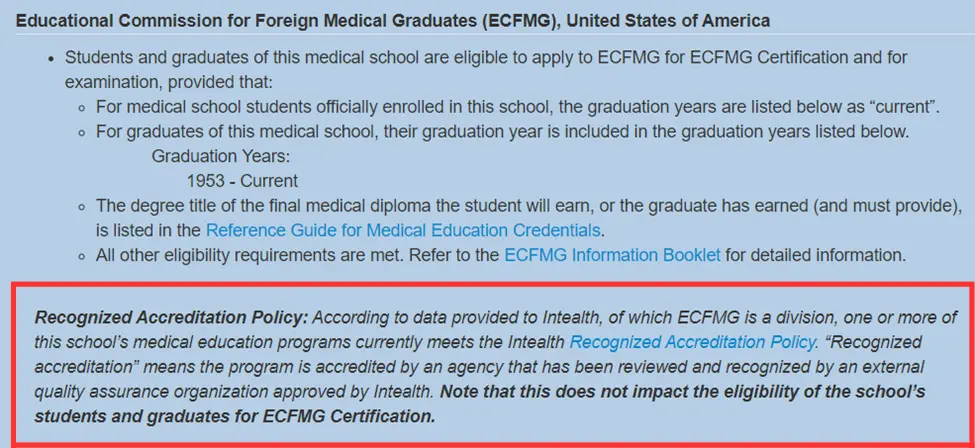
If you’re a student at the University of Damascus, you’ll find a clear note that says: “one or more of this school’s medical education programs currently meets the Intealth Recognized Accreditation Policy.” That’s your green light! Your school meets the new policy requirements.
Figure 1: Screenshot from the WDOMS showing the sponsor note section for the University of Damascus, confirming it meets the Intealth Recognized Accreditation Policy.
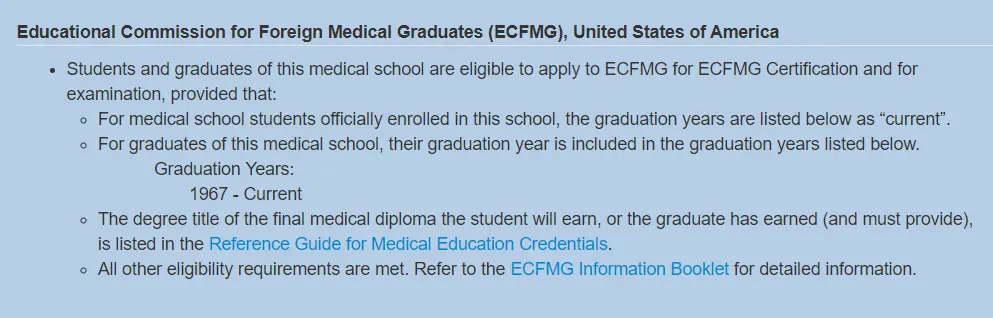
On the other hand, if you check a school like University of Aleppo, you might not see any mention of WFME or NCFMEA in the Sponsor Notes section. That could mean your school doesn’t meet the policy’s requirements—at least for now.
Figure 2: Screenshot from the WDOMS showing the sponsor note section for the University of Aleppo, with no mention of Intealth Recognized Accreditation Policy indicating that it is NOT currently accredited.
Would You Like Us to Help You Ace Your STEP Exams?
The Sponsor Notes section in WDOMS is like the fine print that programs, credentialing bodies, and you—yes, you—can use to understand a school’s accreditation status. Here’s why it matters:
If a Sponsor Note mentions WFME or NCFMEA recognition, it means your school’s accreditation has been verified against international standards.
If it doesn’t, your school might not yet meet the policy requirements—or the accrediting agency hasn’t been recognized yet.
Curious about delving into research but unsure where to begin?
Our Premium Research Bundle has you covered! This package brings together all of our research courses to provide you with a comprehensive learning experience.
Intealth’s Recognized Accreditation Policy marks a significant step forward in enhancing the quality and transparency of global medical education. While it currently doesn’t affect your eligibility for ECFMG certification or residency applications, it does set the stage for a more accountable system that benefits students and residency programs alike. Staying informed about your medical school’s accreditation status will not only boost your confidence but also ensure you’re well-prepared for any changes in the medical education landscape. With this knowledge, you can focus on advancing your career and making the most of the opportunities ahead.
To learn more about the costs and process for an agency to become accredited by WFME, check out this blog.
TheMatchGuy is a premier medical consulting firm trusted by over 35,000 students and doctors worldwide. Known for our track record and specialization in helping MATCH® Applicants secure residency spots at programs in the United States 🇺🇸 and exceptional guidance in Research, USMLE prep, and clinical experience services. Learn more about how they can help you achieve your career goals. Schedule a discovery call for FREE now.