
Residency Interviews Blog
How to Prepare for Residency Interview Day
If you want my team to help you with your Interview Preparation, click here.
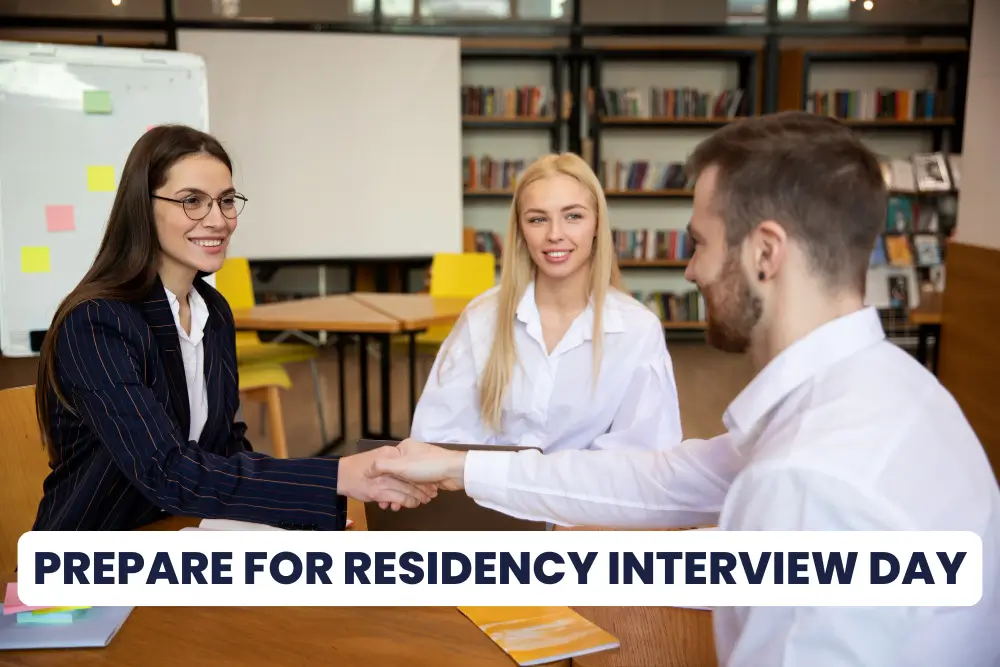
Residency interviews are a crucial part of the application process, and, with the right preparation, a great opportunity to stand out as an applicant. After all the hard work you’ve put into your application, this is your chance to show programs who you are beyond your scores and CV. Although it’s an incredibly exciting time, it can also be overwhelming to approach this process. We’ve developed a step-by-step guide to help you feel prepared, confident, and ready to make your best impression on your interview days.
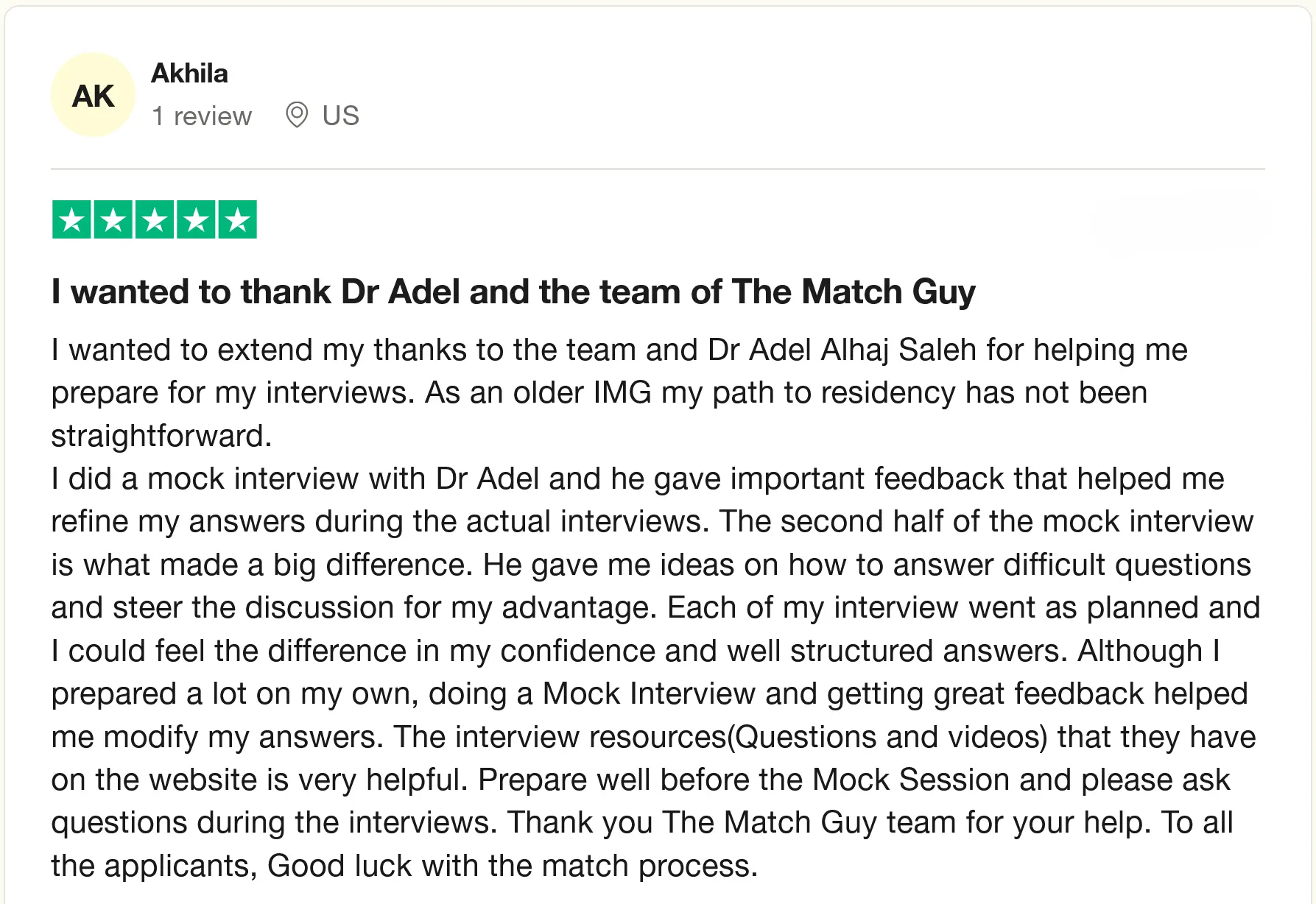
If you need any coaching or guidance with your interview preparation, make sure to check out our interview coaching package here in which we do one-on-one mock interviews and provide feedback.
We also have detailed guides on how to address red flags during interview day, how to answer “Tell Me About Yourself” in Residency Interviews, and 250+ residency interview questions.
Research the program ahead of time
Before interview day, take time to research the residency program so you can ask thoughtful questions and show genuine interest.
- Explore the program details: Review the program’s website, including its mission statement, curriculum structure, and clinical training sites.
- Faculty and mentorship: Explore research interests and resident profiles to identify shared passions, potential mentors, and get a sense of the team dynamic.
- Know key contacts: Note the names and roles of the program director and program coordinator for future communication.
- Learn about the residents: Look at the program’s social media pages to understand its culture—such as wellness initiatives, community outreach, and how residents support one another.
- Take notes and connect to your story: Write down how the program’s values and opportunities align with your goals, and prepare specific examples to discuss on interview day.
Develop your personal narrative
It’s important to approach interviews with a concise, focused story of who you are, what shaped your path to medicine, and what drew you to your chosen specialty.
- Expect to answer “Tell me about yourself”: Treat this as your opening pitch that introduces who you are and sets the tone for the interview.
- Identify key themes: Review your application to find recurring threads—such as research, service, or education—and connect them to meaningful experiences like patient care, projects, or leadership roles.
- Share your story, not your résumé: Focus on a concise narrative that explains what shaped your path to medicine and what inspired your specialty choice. Highlight motivations and lessons learned rather than listing accomplishments.
- Practice your delivery: Aim for a natural, 1–2 minute response that flows smoothly and ends by expressing enthusiasm for your next stage of training.
Thoroughly review your application
When preparing for residency interview questions, you should not write out your answers and memorize them or read from a script. Instead, you should aim to understand your experiences and communicate clearly how they connect back to your personal narrative.
- Know your application inside and out: Review your CV, personal statement, and major experiences so you can confidently discuss any project, leadership role, or volunteer activity you’ve listed.
- Focus on reflection, not memorization: Understand your experiences and how they shaped your path to your specialty—avoid scripted answers and aim to speak naturally.
- Highlight key qualities: Use your stories to demonstrate attributes programs value most, such as teamwork, communication, leadership, resilience, and empathy.
- Prepare for common questions: Expect to answer “Why this specialty?” and “Why this program?” as well as behavior- or situation-based questions; have diverse examples ready from clinical, research, or volunteer settings.
- Practice adaptable storytelling: Outline main takeaways from your top experiences and rehearse sharing them smoothly so you can adjust your stories to fit different questions confidently.
Practice, practice, and more practice
Practicing for interviews is one of the best ways to help you build confidence and improve your delivery. This isn’t just a way to rehearse your answers ahead of time; it also helps you train yourself to think on your feet and communicate effectively under pressure
- Practice with different people: Schedule mock interviews with friends, peers, and mentors to build confidence, improve delivery, and get used to different interview styles and personalities.
- Simulate real conditions: Have your partners ask a mix of open-ended, behavioral, and situational questions to help you practice thinking on your feet and transitioning smoothly between topics.
- Refine your presentation: Focus on clear speech, natural eye contact, confident body language, and organized answers centered around key stories or themes.
- Avoid over-rehearsing: Aim for responses that sound genuine and thoughtful rather than memorized or scripted.
- Seek feedback and review: After each session, ask for specific feedback and consider recording yourself to identify strengths and areas for improvement before interview day.
Prepare to ask thoughtful questions
Developing thoughtful questions for residency programs not only shows genuine interest but also helps you determine whether the program truly fits your goals and learning style.
- View your interview as a two-way conversation: While programs are assessing you, you’re also evaluating them. Preparing intentional, well-researched questions signals that you’ve done your homework and that you’re seriously considering how you’d contribute to and grow within their training environment.
- Do your research: Review the program’s website—especially sections on curriculum, call structure, and research—to identify gaps or topics you’d like to learn more about.
- Ask meaningful, specific questions: Focus on areas that reflect your priorities (e.g., mentorship, diversity, operative experience, or community engagement) and avoid easily searchable details like salary or vacation time.
- Prepare your questions in advance: Write a list ahead of time so you’re not caught off guard after a long interview day.
Plan Ahead for Interview Day Logistics
Preparing early—whether for a virtual or in-person interview—helps you stay confident, avoid last-minute issues, and focus on connecting with your interviewers.

- Maintain professionalism throughout: Dress formally, maintain good posture and eye contact, and treat virtual interviews with the same seriousness as in-person ones.
- Make a positive impression from the start: Be organized, courteous, and responsive in all communications—your professionalism is noticed well before the interview begins.
- For in-person interviews: Plan your outfit, route, and arrival time in advance. Arrive about 15 minutes early, bring copies of your CV, a notepad, and a pen, and choose professional yet comfortable attire.
- For virtual interviews: Test your camera, microphone, and internet connection beforehand. Use good lighting, a quiet professional background, and turn off notifications to stay focused.
Practice interviewing with our experts who trained at top-notch residency programs!
Send Thank You Notes
Sending a well-written thank you note following your interview is a professional way to reiterate your interest in the program.
- Send your note promptly: Aim to write and send your thank-you email within 24–48 hours of your interview while the conversation is still fresh in everyone’s mind.
- Personalize each message: Mention something specific you discussed with the interviewer—such as a shared interest, a memorable topic, or a unique aspect of the program that stood out to you.
- Express genuine appreciation: Thank them for their time, hospitality, and the opportunity to learn more about the program. Keep your tone warm but professional.
- Reinforce your interest: Briefly restate why the program aligns with your goals and what excites you most about potentially training there.
- Keep it concise and polished: One short, well-written paragraph is ideal. Proofread carefully and use a professional closing with your full name and contact information.
FAQs
1. What should I wear to my interview?
Dress in professional, conservative attire—a dark suit with a button-down shirt or blouse is typically appropriate. Keep accessories minimal and grooming neat. Even for virtual interviews, dress fully as you would in person.
If you want a more in-depth answer, check out What to Wear to Your Residency Interview.
2. How should I take notes during interview day?
Take brief, discreet notes between sessions—not while your interviewer is speaking. Jot down key impressions, unique aspects of the program, and people’s names to reference in your thank-you notes.
3. Should I send thank-you notes?
Before sending thank you notes, confirm that they are allowed by the program. If allowed, sending a short, sincere thank-you note within 24–48 hours of the interview is a great way to reaffirm your interest in the program and express gratitude for the opportunity to interview.
4. What if I don’t know the answer to a question?
It’s okay not to know everything. Take a moment to pause and collect your thoughts. Then fall back on your preparation. Emphasize your approach to qualities that matter – problem-solving, using available resources, and seeking guidance appropriately.
5. How can I manage interview-day nerves?
Prepare early, get a good night’s sleep, and plan ahead to minimize stress. Take some deep breaths before interviews, smile, and remind yourself that programs want to know you, not a perfect script. Confidence will follow your preparation and authenticity.
6. What should I bring to an in-person interview?
Bring extra copies of your CV, a small notebook and pen, a list of questions for interviewers, and a professional-looking folder or portfolio. Keep your phone silenced and tucked away. For long travel days, pack snacks, water, and a backup of essentials.
We hope this guide helps you feel prepared, confident, and ready to make your best impression on your interview days!
If you need help with interview coaching or having an expert provide comprehensive feedback on your performance, don’t hesitate to reach out to us HERE!
If you have any questions about any of our services, don’t hesitate to reach out to our customer support service here.
If you’re preparing for the 2026/2027 Residency Interviews, get access to our Residency Interview Preparation Resources 📦 — featuring 250+ residency interview questions, sample perfect answers, and exclusive resources to help you excel.
Good Luck Everyone!
By Dr. Natalia Queenan
2026 Residency Personal Statement The Ultimate Guide to Crafting Your Residency Personal Statement

Best Resources for USMLE STEP 1! How to Study and Prepare for STEP1?

ERAS Application 2026 Guide! How to Fill Out ERAS Residency Application?
RECOMMENDED ARTICLES
ERAS Application 2026 Guide!
Personal Statement Samples Blog
Letters of Recommendation for ERAS and Residency Applicants